


Summary
Yes. You can have multiple ISAs (individual savings accounts), and since 6 April 2024 you can pay into more than one of the same type in a tax year, including with different providers. The main rule is that your total across all ISAs can’t go over £20,000 in 2026/27. The exception is the Lifetime ISA: you can only pay into one each tax year, up to £4,000, which counts towards your £20,000.
How many ISAs can you have, and can you pay into more than one ISA a year?
There’s no limit on how many ISAs you can have or pay into. Since 6 April 2024, you can pay into several ISAs of the same type in one tax year, as long as your total stays within the £20,000 ISA allowance. The Lifetime ISA is the exception though as you can only pay into one per tax year.
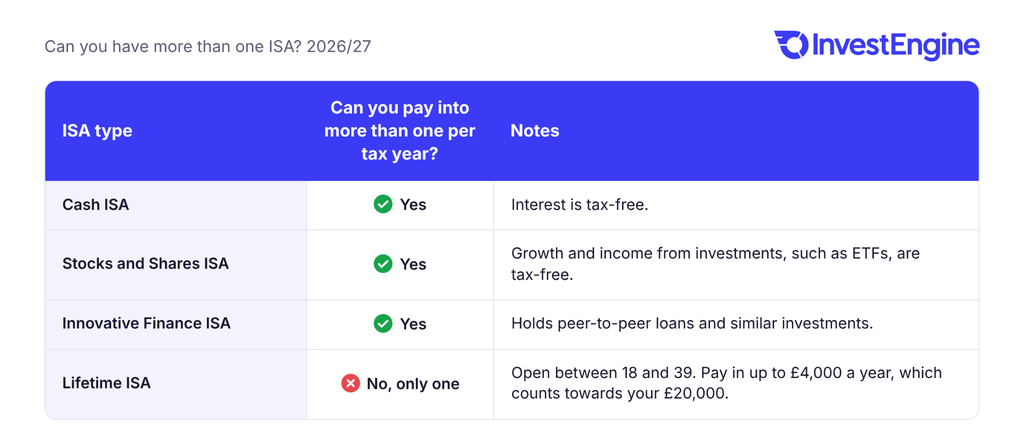
You can also keep ISAs from previous years open, even if you’re not paying into them. Money already inside them stays tax-free.
What is the ISA allowance in 2026/27?
The ISA allowance is £20,000 for the 2026/27 tax year, which runs from 6 April 2026 to 5 April 2027. The allowance is shared across every ISA you pay into, so it’s a total limit, not a limit per account.
The ISA allowance resets every 6 April. Any allowance you don’t use by 5 April is lost, and you can’t carry it forward to the next tax year.
Worked example: how can you split £20,000 across ISAs?
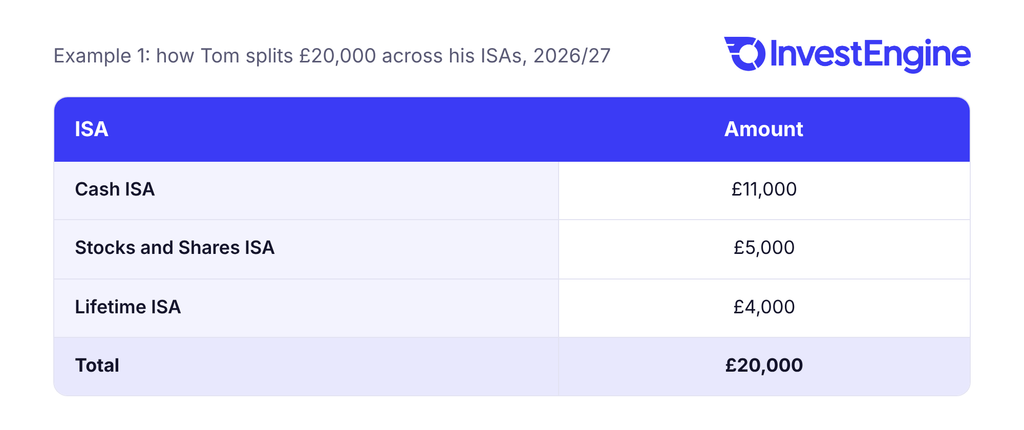
You can split the £20,000 ISA allowance in almost any way you like, as long as the total doesn’t go over £20,000 and you pay into no more than one Lifetime ISA. These two examples both use the full £20,000 in 2026/27.
Example 1: Tom, saving for a first home and for the long term
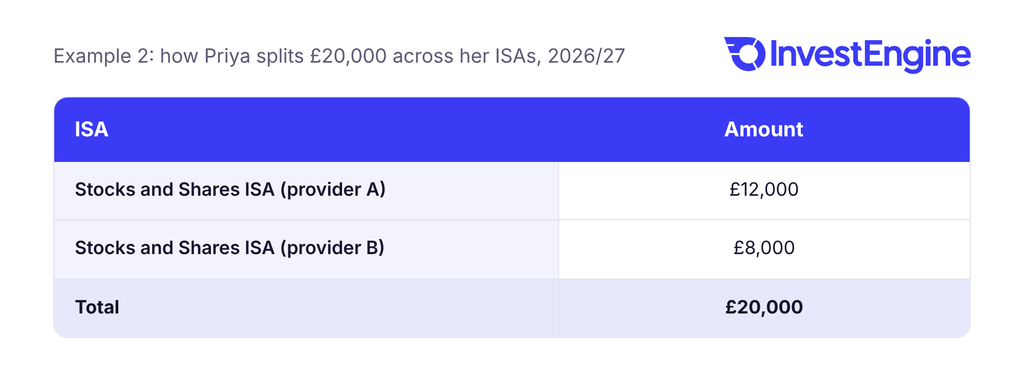
Example 2: Priya, investing for the long term
Priya already has a Stocks and Shares ISA with one provider and opens a second with another. She splits her £20,000 allowance between them in 2026/27. Paying into multiple ISAs of the same type in one tax year has been allowed since 6 April 2024.
These examples are illustrations, not recommendations. The value of investments can fall as well as rise.
Can you open ISAs with different providers?
Yes. You can hold ISAs with as many different providers as you like, and you can pay into several in the same tax year. The £20,000 ISA allowance is still shared across all of them.
Each provider only sees what you pay into its own ISA. It’s up to you to keep track of your total, so spreading payments across several providers makes it easier to go over the limit by mistake.
If you do pay in more than £20,000, HMRC will usually ask your provider to ‘repair’ the ISA. The excess and any income or gains on it are removed from the ISA, and you may have tax to pay on that income and those gains. The rest of your ISA stays tax-free.
Do ISA transfers count towards your allowance?
No. Moving money from one ISA to another through a proper ISA transfer doesn’t use up any of your £20,000 allowance. The money keeps its tax-free status throughout.
You can transfer all or part of an ISA, including money you paid in this tax year or in earlier years. Any money you paid in during the 2026/27 tax year still counts towards this year’s £20,000, whichever ISA it ends up in.
Always use your new provider’s transfer process rather than withdrawing the money yourself. If you take cash out and pay it into another provider’s ISA, it counts as a new payment and uses up this year’s allowance. Some ISAs, including the InvestEngine ISA, are flexible, so you can withdraw and replace money within the same ISA in the same tax year without using more of your allowance.
How to transfer your ISA to InvestEngine
What are the pros and cons of having more than one ISA?
Having more than one ISA can help you hold cash and investments separately, but it also means more admin. Many people find it simpler to bring old ISAs together with a transfer.
Pros
- Different goals in different places. You could keep an emergency fund or money you might need in a few years in a Cash ISA and long-term investments in a Stocks and Shares ISA.
- More choice. You can use different providers for different types of ISA.
- No need to close old ISAs. Money in ISAs from previous years stays tax-free.
Cons
- More to keep track of. Several logins, statements and sets of fees.
- Risk of going over £20,000. No single provider can see your total.
- Harder to see the full picture. Spreading money around can make it harder to manage your overall mix of investments.
What changes from April 2027?
From 6 April 2027, people under 65 will only be able to put £12,000 of their £20,000 allowance into cash ISAs. The overall £20,000 ISA allowance stays the same, and people aged 65 and over can still put the full £20,000 into a Cash ISA.
From the same date, new rules will also apply:
- 22% charge on cash interest. Interest on cash held inside a Stocks and Shares ISA will be taxed at a flat 22%.
- No transfers into cash ISAs for under-65s. You won’t be able to move money from a Stocks and Shares ISA into a cash ISA.
What about Junior ISAs?
A Junior ISA is a separate account for a child under 18, and it has its own limit of £9,000 for 2026/27. The money belongs to the child, so paying into a Junior ISA doesn’t use your own £20,000 ISA allowance. The child can take control of the account at 16 and withdraw the money at 18.
What if your ISA is full?
If you’ve used your £20,000 ISA allowance, you can keep investing in a GIA (general investment account) or a SIPP (self-invested personal pension). A SIPP adds tax relief but you usually can’t access it until 55, rising to 57 from 6 April 2028. A GIA has no limit, but gains and income can be taxed.
Read our guides to ISA vs SIPP vs GIA: which account should you open? to find out more.
How do you open or move an ISA with InvestEngine?
You can open an InvestEngine Stocks and Shares ISA with £100 and invest in ETFs (exchange-traded funds), which are low-cost funds that usually track a market. You can build your own ETF portfolio, choosing from over 800 ETFs. If you have ISAs elsewhere, you can bring them together by transferring them to InvestEngine.
- Transfers from most providers: move Stocks and Shares ISAs from other providers.
- No impact on your allowance: a proper transfer doesn’t use any of your £20,000.
- DIY: choose your own ETFs from our carefully approved list.
Frequently asked questions
Can I have two Stocks and Shares ISAs?
Yes. Since 6 April 2024, you can pay into more than one Stocks and Shares ISA in the same tax year, including with different providers. Your total payments across all your ISAs can’t go over £20,000 in 2026/27. You can also keep older Stocks and Shares ISAs open, and they stay tax-free.
Can I have a cash ISA and a Stocks and Shares ISA?
Yes. You can pay into a Cash ISA and a Stocks and Shares ISA in the same tax year, as long as the total stays within your £20,000 ISA allowance for 2026/27. From 6 April 2027, people under 65 will only be able to put up to £12,000 of that £20,000 into cash ISAs.
How many ISAs can I pay into in one year?
There’s no limit on how many ISAs you can pay into in one tax year. Since 6 April 2024, you can pay into several ISAs of the same type. The only rules are that your total can’t go over £20,000 in 2026/27 and you can only pay into one Lifetime ISA each tax year.
Can I have more than one Lifetime ISA?
You can only pay into one Lifetime ISA in each tax year, up to £4,000, and that £4,000 counts towards your £20,000 ISA allowance. You may hold an older Lifetime ISA from a previous year, but you can only pay into one in any single tax year. You must open a Lifetime ISA before your 40th birthday.
Does transferring an ISA use my allowance?
No. Transferring an ISA to another provider through a proper ISA transfer doesn’t use any of your £20,000 allowance, and the money stays tax-free. Don’t withdraw the money and pay it in yourself, because that counts as a new payment and uses up this year’s allowance. Ask your new provider to arrange the transfer.
What happens if I go over the ISA limit?
If you pay more than £20,000 into ISAs in a tax year, HMRC will usually ask your provider to repair the ISA. The excess, and any income or gains on it, are removed from the ISA and may be taxed. The rest of your ISA stays tax-free. Tracking your payments across providers helps you avoid this.
Can I keep my old ISAs open?
Yes. You can keep ISAs from previous tax years open, and the money inside them stays tax-free even if you no longer pay in. Many people transfer old ISAs to one provider to make them easier to manage. A proper ISA transfer doesn’t use any of your remaining £20,000 ISA allowance.
Can I have an ISA and a SIPP?
Yes. ISAs and SIPPs have separate allowances, so paying into a SIPP doesn’t reduce your £20,000 ISA allowance. A SIPP adds tax relief on contributions, but you usually can’t access it until age 55, rising to 57 from 6 April 2028. An ISA lets you withdraw at any time. Many people use both.
What to do next
- Check how much allowance you’ve used. Add up what you’ve paid into all your ISAs since 6 April 2026.
- Decide your split. Think about how much you want in cash and how much you want to invest for the long term.
- Open or transfer with InvestEngine. Open a new Stocks and Shares ISA, or bring your old ISAs together with a transfer.
Important information
Capital at risk. The value of your investments can go down as well as up and you may get back less than you invest. ETFs carry costs, and their value can fall as well as rise. Tax treatment depends on your individual circumstances and may change in the future. This is general information, not personalised advice.