


TL;DR: A Legal Entity Identifier (LEI) is a unique 20-character code that identifies a legal entity in financial markets. In the UK, a business can’t invest without an active LEI (“no LEI, no trade”). UK limited companies, LLPs, partnerships, charities and trusts generally need one to invest; sole traders don’t. LEIs must be renewed annually to stay active, and typically cost around £40–£60 + VAT per year. InvestEngine registers the LEI for new Business Account customers and covers the cost for the first year.
If your business wants to invest, you’ll hit one bit of important admin pretty early on: the Legal Entity Identifier, or LEI.
It’s actually a quick, one-off bit of setup that essentially allows your business to start investing. Once you understand what it is, the rest is easy.
Just so you know: InvestEngine provides all businesses that invest with us a free LEI for their first year. We’ll even sort it out for you, so you can stop reading now and go down that route if you want to save time.
What is an LEI?
An LEI is a code that uniquely identifies a legal entity (your business) in financial markets. Think of it like a passport for your company: wherever it trades, regulators and providers can use the LEI to know exactly which entity is doing the trading.
LEIs were introduced after the 2008 financial crisis, when regulators realised they couldn’t easily track which businesses were involved in which transactions.
Every LEI is unique, and behind the 20-character code sits a record with verified reference information: the company’s legal name, registered address, country of formation and ownership structure. It’s a single, internationally recognised ID for your business.
Why do businesses need one to invest?
In short: regulation. Under UK and EU rules, financial firms can’t execute a trade on behalf of a client that’s eligible for an LEI and doesn’t have one. The industry shorthand for this is “no LEI, no trade”.
That means if your company wants to:
- Buy or sell shares, ETFs, bonds or funds
- Hold an investment account in the company’s name
- Trade through an investment platform like InvestEngine
Then you need an active LEI before you do any of it. Without one, the broker simply can’t place the trade.
It’s not to do with tax or Companies House, it’s a financial markets thing. The LEI lets regulators see exactly which legal entity is behind each transaction, which helps them spot risk and prevent market abuse.
Who actually needs one?
Any legal entity that takes part in financial transactions needs an LEI. These are most commonly:
- UK limited companies (Ltd)
- Limited Liability Partnerships (LLPs) and ordinary partnerships
- Charities and trusts that invest
- Pension schemes (including SSASs)
Sole traders generally don’t need one. Because there’s no separate legal entity, you invest as an individual.
How an LEI works in practice
- It’s issued once. When you (or your platform) register, an accredited issuer checks your company details against the official register and assigns your unique 20-character code.
- It needs to be renewed annually. If your LEI lapses, your record is flagged as inactive and your investment account can’t place new trades until it’s renewed.
- It travels with you. Once your business has an LEI, you don’t need a new one if you switch platforms. The same code identifies you everywhere.
- It’s public. Anyone can look up an LEI in the global database to verify a business. It’s useful for transparency.
What it costs
LEIs are issued on a cost-recovery basis by accredited providers. Pricing varies, but you’re typically looking at roughly £40–£60 + VAT for the initial registration, plus a similar amount for each yearly renewal.
With an InvestEngine Business Account, we organise the LEI for you and cover the cost for the first year. You won’t be chasing a separate provider or filling in extra paperwork to get started. After year one, renewal is a quick, low-cost admin job.
Common questions
Can I trade while I’m waiting for my LEI to be issued?
No. The account can be set up, but trades can’t be placed until the LEI is live.
What happens if I forget to renew?
The LEI moves to a “lapsed” status. You won’t be able to buy or sell investments until it’s renewed and active again.
Do I need a new LEI if I change my company name or address?
No, but the LEI record needs to be updated to reflect the change at the next renewal.
The bottom line
An LEI is the regulatory tick-box that lets your business take part in investing. It’s a one-off bit of setup, easy to maintain, and once it’s sorted you don’t really have to think about it again.
With InvestEngine, it’s one less thing on your to-do list. We handle the registration and cover year one, so you can focus on putting your company’s cash to work.
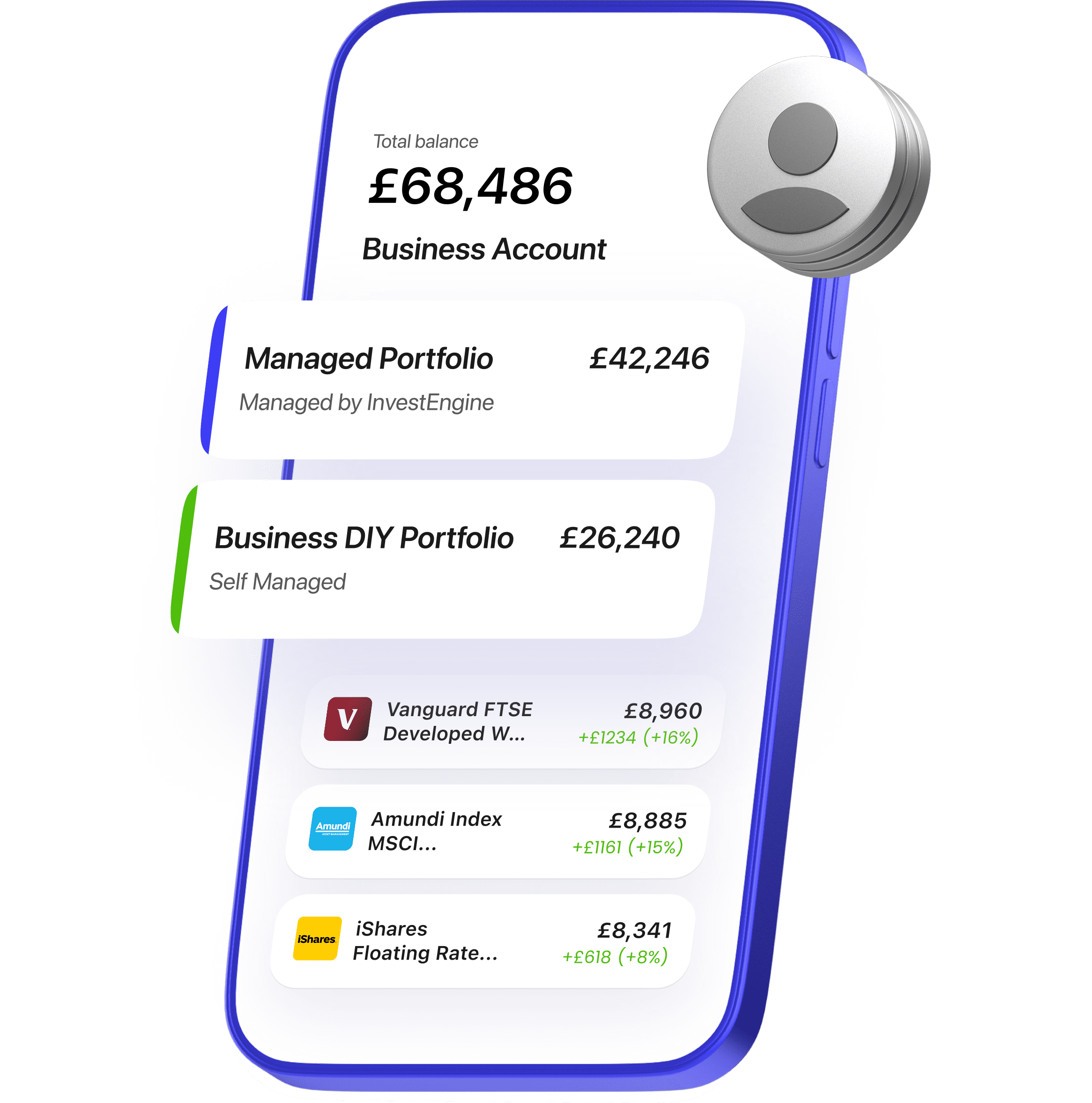
Put your business cash to work
Take advantage of powerfully simple business investing with InvestEngine. We make it easy to build and maintain a long-term investment portfolio that suits you and your business.
Find out moreCapital at risk. Ts&Cs apply
Important information
Capital at risk. The value of your portfolio with InvestEngine can go down as well as up and you may get back less than you invest.
ETF costs also apply. This communication is provided for general information only and should not be construed as advice.