


TL;DR When you invest your business cash, bring your accountant: (1) your company details and year-end dates, (2) what you plan to invest in and why, (3) how the investment account will be recorded in bookkeeping, and (4) the documents that show income, dividends, and gains.
This article is general information, not tax advice. Your accountant/tax adviser should confirm what applies to your company’s circumstances.
This article was created in conjunction with Ecommerce Accountants.
Part 1: What to take to your accountant before you start investing
The goal of this first conversation is to confirm:
- the investing plan is suitable for the company’s cash needs,
- the record-keeping/tax treatment is understood up front,
- nothing creates unexpected issues (e.g. for trading status, group structures, or reporting).
Your accountant should already have a lot of the following information (unless it’s a new engagement) but it won’t hurt to make sure you’ve got it to hand if necessary.
Company basics (bring this first)
- Company name and number (Companies House details)
- Legal structure (Ltd, LLP, group/holding company, etc.)
- Accounting period dates (year-end) and Corporation Tax filing/payment deadlines
- Whether the company is VAT-registered (and any VAT quarter dates if relevant)
- Any known constraints (e.g. lender covenants, investor agreements, shareholder agreements)
Cashflow context (so you don’t invest money you’ll need)
- How much cash is:
- operational cash (payroll, suppliers, rent, etc.)
- tax reserves (VAT, Corporation Tax)
- surplus/retained profits (longer time horizon)
- Expected timing of cash needs (next 1–3 months, 3–12 months, 1–5 years)
Investment intent (so your accountant understands “what” and “why”)
- What you plan to invest in (high level):
- cash-like funds / overnight rate ETFs
- bond funds
- equity funds
- Your expected holding period (short vs long term)
- Whether you need regular withdrawals (and approximate frequency)
Tax + reporting questions to ask your accountant up front
- How will investment income be treated (dividends vs interest vs other distributions)?
- How will gains/losses be treated for Corporation Tax purposes?
- If investing globally, how should withholding tax be handled?
- What records do they want from you during the year vs at year-end?
Part 2: What your accountant will likely need during the year
Limited companies must keep accounting records, including details of assets owned, money received/spent, and other information needed to prepare accounts and the Company Tax Return.[1]
In practice, for an investment account, this usually means keeping a tidy evidence trail:
Ongoing documents to save (monthly/quarterly is ideal)
- Investment platform statements (showing holdings and valuations)
- Transaction history (buys/sells, deposits/withdrawals)
- Dividend and interest statements (payments and dates)
- Notes of any corporate actions (fund mergers, share splits, etc.)
- Any fees/charges summary (if applicable)
A simple internal log (saves time later)
Keep a lightweight spreadsheet (or a Notion table) with:
- Date, type (buy/sell/dividend/interest/fee), instrument name/ticker (if available), amount, currency, and a link to the supporting statement.
Part 3: What your accountant will need at year-end (tax time)
At year-end, your accountant is trying to answer: “What taxable income/gains were generated in this accounting period, and what needs to be reported?”
Bring/provide:
- Year-end statement (holdings + valuations at the accounting period end)
- Realised gains/losses report (if the platform provides it)
- Dividend summary (UK vs overseas, and any withholding tax deducted)
- Interest/income summary (especially for cash-like products)
- Any consolidated tax certificate / annual tax summary (if provided by the platform)
If you have multiple investment accounts (or other investment income), tell your accountant so they can aggregate it correctly.
Part 4: Common potential issues to highlight early
- Rebalancing and internal sales: even if you don’t withdraw money, sales inside the account can create realised gains/losses.
- Overseas withholding tax: global equity exposure may lead to tax withheld before dividends reach the account.
- Timing differences: your investment platform may report on a tax year basis while your company accounts run to a different year-end.
- Mixing personal and company money: keep the business account clearly separate from personal investing to avoid messy bookkeeping.
One-page checklist
Before investing
- Company number + structure
- Accounting period dates
- Cashflow plan (operational, tax reserves, surplus)
- Intended investments + time horizon
- Bookkeeping approach (how will it be recorded?)
During the year
- Statements saved regularly
- Transaction history kept
- Dividend/interest records saved
- Simple internal log maintained
At year-end
- Holdings/valuation at year-end
- Gains/losses report
- Dividend/withholding tax summary
- Interest/income summary
- Consolidated annual tax certificate / summary (if available)
Bottom line
If you walk into the first meeting with the items above, your accountant can usually:
- sanity-check the plan,
- set up clean bookkeeping rules from day one,
- reduce the risk of surprises at year-end.
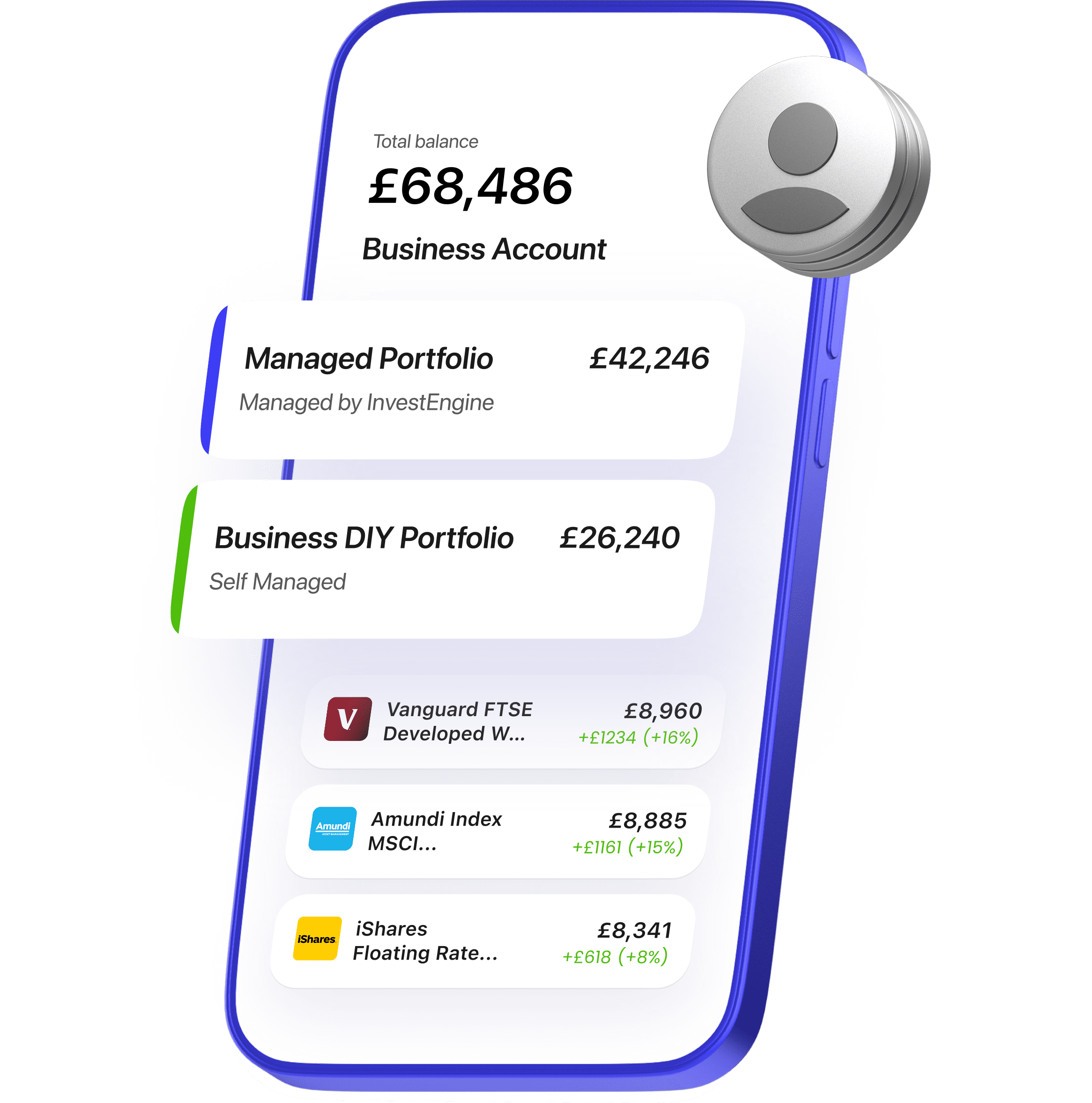
Put your business cash to work
Take advantage of powerfully simple business investing with InvestEngine. We make it easy to build and maintain a long-term investment portfolio that suits you and your business.
Find out moreCapital at risk. Ts&Cs apply
Important information
Capital at risk. The value of investments may go down as well as up, and you may get back less than you invest. Past performance is not indicative of future performance. ETF costs apply. Tax rules can change and any benefits depend on individual circumstances. If in doubt, consider professional advice.