


TL;DR “Dividend investing” means aiming for returns mainly from dividends paid by shares (or equity funds). “Income investing” is broader: it can include dividends and bond interest/cash-like yields. For UK companies, dividends received by a company are often exempt from Corporation Tax, but interest-type income is typically taxable, so the mix can matter.
This article is general information, not tax advice. Tax treatment depends on company circumstances and can vary by instrument/fund type.
This article was created in conjunction with Ecommerce Accountants.
Dividend investing vs income investing (what’s the difference?)
Dividend investing
A dividend-focused approach typically targets:
- shares of companies that pay regular dividends
- equity income funds / dividend ETFs
Returns can come from:
- dividends (cash paid out)
- share price movements (capital growth or loss)
Income investing (broader)
An “income” approach may include:
- dividend-paying equities
- bonds and bond funds (income mainly via interest)
- money market funds / cash-like ETFs (income generally linked to interest rates)
- multi-asset income portfolios (mix of the above)
So: dividend investing is a subset of income investing.
Are dividends taxed for businesses in the UK?
A key difference from personal tax: dividends received by UK companies are commonly treated under a dividend exemption regime, meaning many UK and overseas dividends received by UK companies are often exempt from Corporation Tax, subject to conditions.[1][2]
What this means in practice:
- Two investments might both “pay income”, but the tax treatment can differ depending on whether that income is treated as a dividend or interest/other income.
What about interest income (bonds, money market funds, “yield” products)?
Interest-type income is typically treated differently from dividends and may be taxable under Corporation Tax.
That’s why, from a tax perspective, “income investing” can be more nuanced for a company than it first appears: not all “income” is equal.
The overseas dividend wrinkle: withholding tax
If a UK company receives dividends from overseas companies, the overseas country may withhold tax before paying the dividend to the UK company.[3]
Practical points to discuss with an accountant:
- whether withholding tax can be credited/relieved (depends on circumstances and treaties)
- how to evidence the tax withheld (statements, tax vouchers, etc.)[1]
So… should a business prefer dividends or “income”?
There isn’t a universal answer, but here’s a sensible way to frame it:
If the business needs stability and short time horizons
Businesses often hold cash for:
- operating buffers
- VAT/Corporation Tax reserves
- planned purchases
In those cases, the bigger question is often risk and liquidity, not tax optimisation.
If the business has longer-term surplus cash
If time horizon is longer, a company might choose a mix of:
- growth assets (equities)
- stabilisers (bonds/cash-like)
Here, the dividend vs interest mix may matter, but it still needs to fit:
- the company’s risk tolerance
- expected withdrawal timing
- how the accountant will treat/report the returns
Questions to take to your accountant
- For what we’re investing in, will returns be mainly dividends, interest, or a mix?
- Are dividends we receive expected to be exempt (and why)?
- If we invest globally, how will withholding tax show up and be handled?
- What year-end reports do you need from the investment platform?
Bottom line
Dividends can be tax-efficient for companies in many cases, but “income investing” is wider than dividends, and the underlying source of income (dividends vs interest) can affect the company’s Corporation Tax outcome. An accountant can confirm the treatment for the specific instruments your company plans to hold.
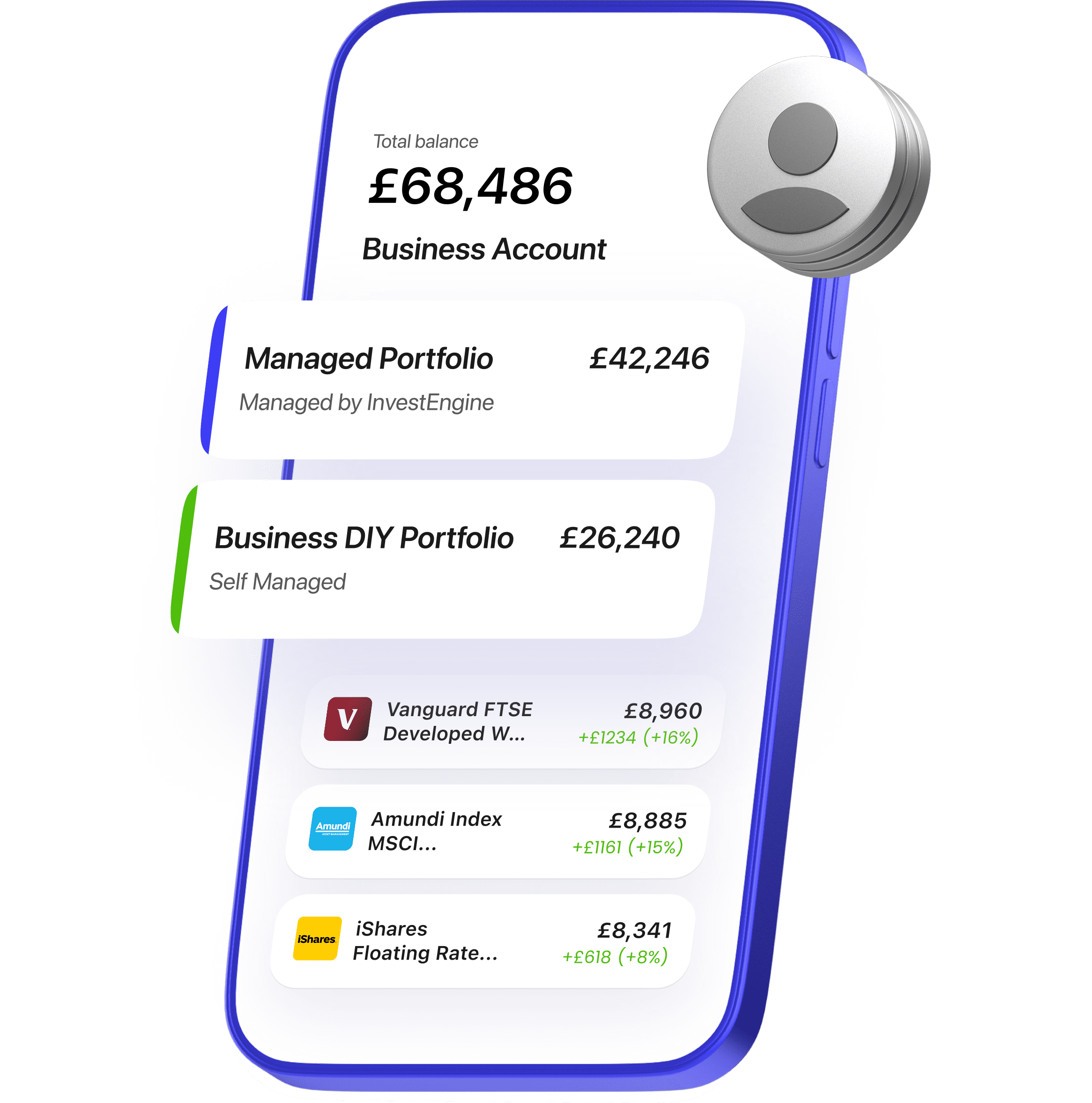
Put your business cash to work
Take advantage of powerfully simple business investing with InvestEngine. We make it easy to build and maintain a long-term investment portfolio that suits you and your business.
Find out moreCapital at risk. Ts&Cs apply
Important information
Capital at risk. The value of investments may go down as well as up, and you may get back less than you invest. Past performance is not indicative of future performance. ETF costs apply. Tax rules can change and any benefits depend on individual circumstances. If in doubt, consider professional advice.