


TL;DR: Most limited company directors pay themselves using a mix of salary and dividends. Salary is paid through payroll and treated as a business cost. Dividends are paid to shareholders out of post-tax profits, which can make them feel more flexible, but they require the company to have distributable profits and the right paperwork.
Salary vs dividends: the difference in a nutshell
A salary is what you pay yourself for the work you do in the business. It runs through PAYE, so you get payslips and the tax and National Insurance are calculated as part of payroll. From the company’s perspective, salary is usually treated as a business expense, which means it can reduce taxable profit.
Dividends are different because they’re not wages. A dividend is a way of sharing company profits with the people who own the company. You receive dividends because you are a shareholder, not because you worked a certain number of hours.
Salary: how it works (and why people use it)
When you take a salary as a director, the company pays you via payroll on a regular schedule. That predictability is a big reason many founders like salary, because it creates a consistent baseline income that is easy to plan around and easy to evidence.
Salary comes with payroll admin and can trigger National Insurance costs. For some companies, that’s worth it for simplicity and stability, and for others it becomes a reason to keep salary modest and use dividends for extra income when profits allow.
Dividends: how they work (and why people use them)
Dividends can only be paid out of profits after Corporation Tax. In simple terms, the company earns profit, pays Corporation Tax, and then chooses whether to distribute some of what’s left to shareholders.
Dividends appeal to many owners because they can be adjusted. If profits are strong, you can pay more. If cash is tight, you can pause dividends without needing to change payroll.
However, the most important detail is that dividends require profits, not just cash. A company can have cash in the bank and still not have distributable reserves. That is why dividend decisions should be made with reference to the accounts, not just the bank balance.
Dividends also require basic governance. In practice, that usually means:
- Confirming you have distributable profits available
- Recording the decision (for example, via board minutes or a written resolution)
- Keeping dividend documentation so accounts and personal tax reporting are straightforward
So what’s the most tax-efficient split?
There is no single best answer that works for everyone. The most tax-efficient approach depends on your profit level, your other personal income, whether there are multiple shareholders, and how you want to plan for the future.
Many owner-managed businesses use a blend because it creates a steady baseline (salary) while keeping dividends as a flexible top up that only happens when the company can afford it.
The cash-flow angle: timing matters
Even when the tax outcome looks fine, timing can make it painful. Salary is usually monthly and predictable, while dividends are typically more up and down. Regardless of how you pay yourself, you still need to ringfence money for VAT (if applicable) and Corporation Tax, because those liabilities arrive on their own schedule.
How this connects to business investing
Your salary and dividend mix affects how much money stays inside the company. If you distribute most profits as dividends, there is less retained profit available to invest.
If you retain more inside the business after covering taxes and operational buffers, you are more likely to have genuine surplus cash that can potentially be invested for longer-term company goals.
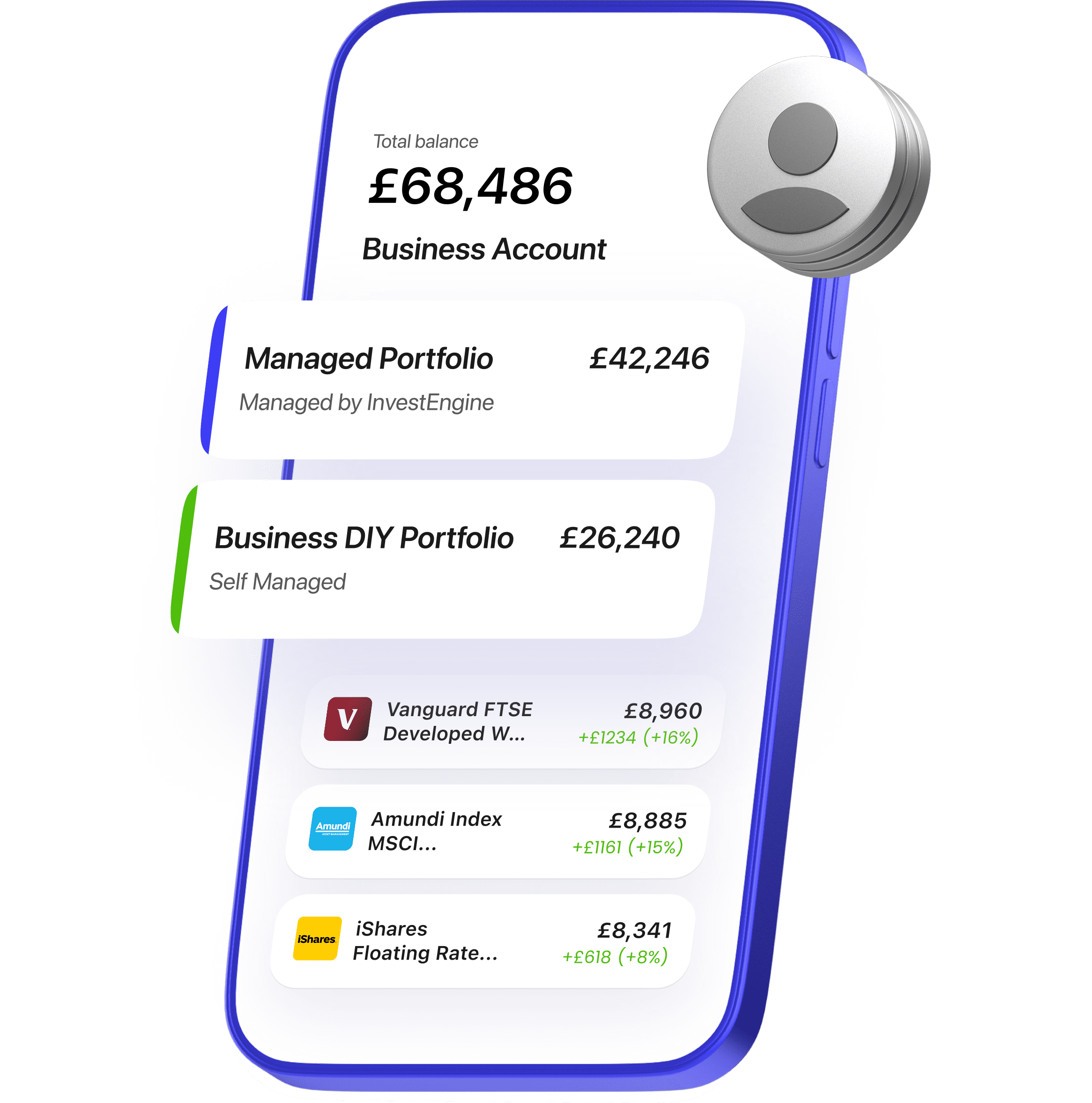
Put your business cash to work
Take advantage of powerfully simple business investing with InvestEngine. We make it easy to build and maintain a long-term investment portfolio that suits you and your business.
Find out moreCapital at risk. Ts&Cs apply
FAQs
Can I pay myself dividends every month?
Yes, many companies do. You still need distributable profits and basic paperwork each time.
Can I pay dividends if the company made a loss this year?
Sometimes. If you have retained profits from previous years, dividends may still be possible, but your accountant should confirm whether you have distributable reserves.
Do dividends reduce Corporation Tax?
No. Dividends are paid out of post-tax profits, so they do not reduce taxable profit in the way salary usually does.
Is salary “worse” than dividends?
Not necessarily. Salary can be simpler and more predictable, and the best mix depends on profits and personal circumstances.
Does salary vs dividends affect an InvestEngine Business Account?
Indirectly, yes. It influences how much cash remains in the company after drawings, which changes what might be available as surplus cash.
Important information
Capital at risk. The value of investments may go down as well as up, and you may get back less than you invest. Past performance is not indicative of future performance. ETF costs apply. Tax rules can change and any benefits depend on individual circumstances. If in doubt, consider professional advice.