


Corporation Tax basics for small businesses (and what affects the bill)
TL;DR: Corporation Tax is paid by limited companies on taxable profits. Your bill is influenced by revenue, allowable costs, payroll, pensions, and reliefs, and the timing can catch you out because tax is usually due after year end. Estimating it throughout the year helps you avoid surprises and decide what cash is genuinely surplus.
What Corporation Tax is (and what it isn’t)
Corporation Tax is a tax on company profits. In simple terms, profit is income minus costs, but taxable profit is not always the same as “profit in your bank account”. Cash timing can distort what you see in the bank, and tax rules can treat certain costs differently.
That is why the safest mindset is that Corporation Tax is driven by your accounts, not your balance.
What affects the bill?
Revenue matters, but it is profit that ultimately drives the bill. If costs rise with revenue, taxable profit may not move much. If margins improve, taxable profit usually rises.
Allowable expenses can reduce taxable profit, which is why good bookkeeping matters. Salaries, rent, software, and professional fees are common examples, but treatment can vary and it is worth confirming anything unusual with your accountant.
Director pay choices can also be important. Salary is generally treated as a business cost, while dividends are paid from post-tax profit. That does not mean salary is always better overall, because personal tax, National Insurance, and cash-flow timing all come into play, but it does explain why dividends do not reduce Corporation Tax.
If you want a quick checklist of the most common things that tend to move the Corporation Tax estimate for owner-managed businesses, it’s usually:
- How profitable the business is overall (revenue and margin)
- What costs are allowable and how clean the bookkeeping is
- How directors are paid (salary vs dividends)
- Any significant capital purchases or investments in the business
- Any losses carried forward or other reliefs/special rules that apply
Capital purchases and investment in the business can affect taxable profit depending on reliefs and allowances. Losses carried forward, associated companies, and marginal relief bands can also change how much you pay and your effective rate.
Why Corporation Tax creates cash-flow stress
Corporation Tax is often due after the end of your accounting period. The problem is behavioural: the profit happened months ago, and it is easy to treat the cash as spendable in the meantime.
Businesses often get caught out after a good year because the bill arrives when the cash has already been used for hiring, stock, or other spending. Setting aside an estimate during the year makes the timing far less painful.
How this links to surplus cash (and investing)
If you are thinking about investing company money, the key question is not “do we have cash?” It is whether you have already ringfenced the Corporation Tax you expect to owe.
Once tax is accounted for and you have built an operating buffer, you can more confidently define what cash is genuinely surplus and could potentially be invested for longer-term company goals.
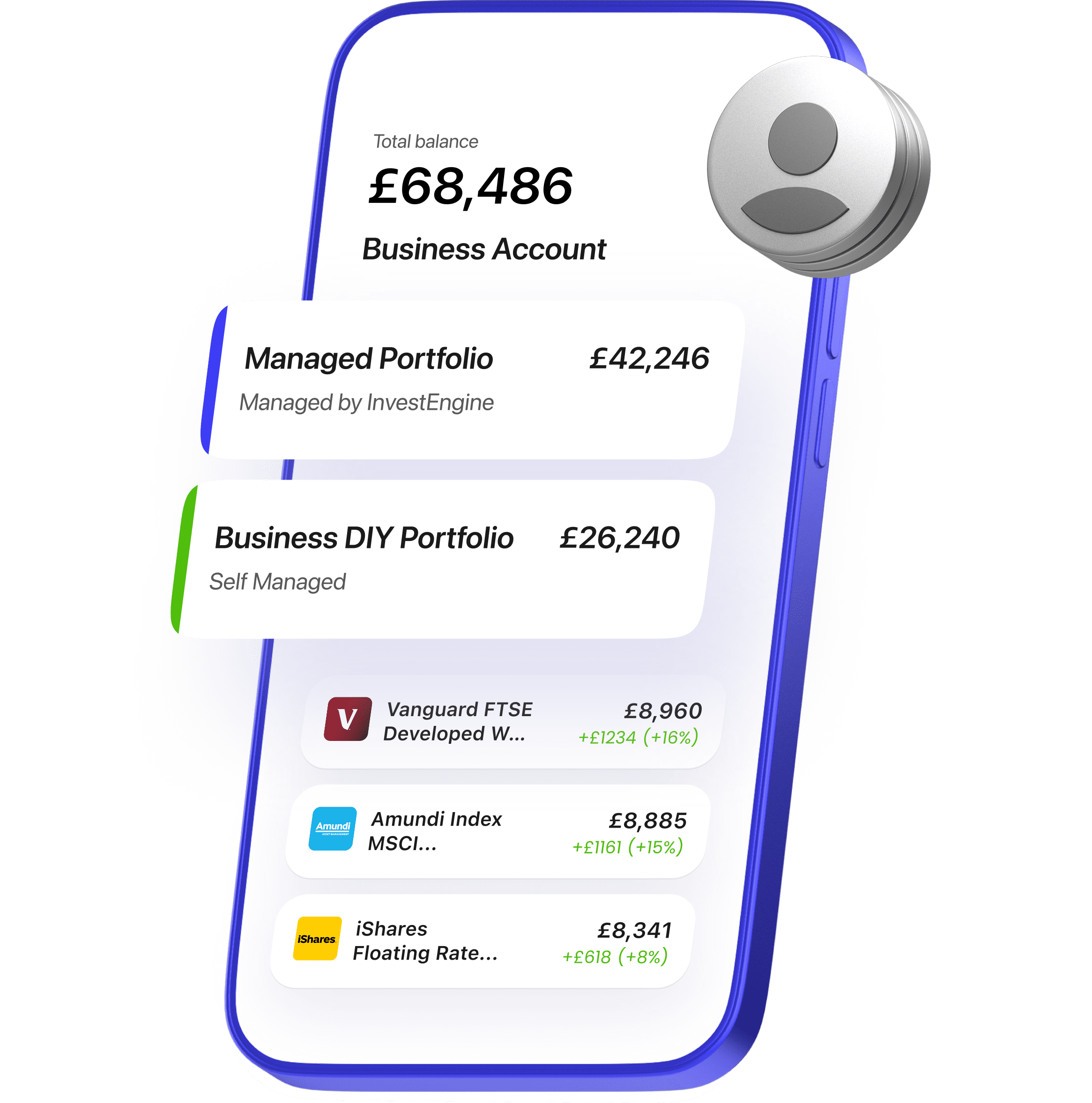
Put your business cash to work
Take advantage of powerfully simple business investing with InvestEngine. We make it easy to build and maintain a long-term investment portfolio that suits you and your business.
Find out moreCapital at risk. Ts&Cs apply
FAQs
Is Corporation Tax the same as Income Tax?
No. Corporation Tax is paid by companies, while Income Tax is paid by individuals.
When do I pay Corporation Tax?
It depends on your accounting period and company circumstances. Confirm your deadlines for your specific year-end.
Does investing company money change Corporation Tax?
Investment income and gains may form part of the company’s taxable results. Keep records and use year-end tax reports provided by your platform.
If I keep money in the company, do I avoid tax?
No. Corporation Tax is based on profits, not whether you draw money out.
What’s the simplest way to avoid a surprise bill?
Estimate profit monthly, set aside an approximate amount into a dedicated Corporation Tax pot, and review it regularly.
Important information
Capital at risk. The value of investments may go down as well as up, and you may get back less than you invest. Past performance is not indicative of future performance. ETF costs apply. Tax rules can change and any benefits depend on individual circumstances. If in doubt, consider professional advice.