


TL;DR: Cash flow is about timing: when money comes in versus when it has to go out. A cash-flow forecast is a simple model of your future bank balance. Start with a basic weekly or monthly view, update it regularly, and use it to spot problems early. Once cash flow is stable, you can define what cash is genuinely surplus and what might be suitable to invest.
What cash flow actually means
Cash flow is the movement of money in and out of your business bank account. A business can be profitable and still get into trouble if cash arrives too late.
A classic example is invoicing a big client on 30-day terms while needing to pay payroll next week. On paper you look fine, because the revenue exists. In the bank you’re squeezed, because the timing doesn’t line up. That is why cash flow is less about “how much we made” and more about whether you will have enough cash on the day you need it.
What is a cash-flow forecast?
A cash-flow forecast is a forward-looking plan that estimates your cash balance over time. It starts with today’s bank balance, then layers on expected receipts and expected payments with realistic dates. The output is a projected balance each week or month.
The goal is visibility and predictability. When you can see a problem coming, you can act early and avoid firefighting.
How to build your first forecast (a simple approach)
First, choose the period you want to forecast. A 13‑week (quarterly) weekly forecast is excellent for day-to-day control, while a 12‑month monthly view is useful for tax planning and annual bills. Many businesses use both, because they answer different questions.
Next, take your current bank balance as the starting point. If you have multiple accounts, you can combine them or forecast them separately, but it’s important to use real numbers.
Then estimate your cash in. Invoices are a starting point, but the forecast needs to reflect how customers actually pay. If a client is typically late, plan for that rather than hoping this time will be different. It pays to be honest with yourself here, rather than going on best case scenarios.
After that, map out your outgoings. This is where timing matters most. Payroll, supplier payments, VAT, and rent often have fixed dates, and those dates create pinch points. Include recurring subscriptions and annual bills as well, because surprises are usually what break forecasts.
Finally, update the forecast regularly. Even a quick weekly refresh keeps it useful. A forecast that is never updated quickly becomes fiction.
How you can try to improve cash flow
Improving cash flow usually comes down to getting cash in sooner, reducing surprises, and smoothing cash out.
You can often get paid faster by invoicing promptly, making it easy for customers to pay, and following up consistently. For larger projects, asking for deposits or milestone payments can reduce the risk of doing work up front and waiting too long for cash.
You can reduce surprises by listing the big quarterly and annual bills, then spreading them across the year or ringfencing money monthly. Insurance renewals and tax payments are predictable, so they do not need to create panic.
You can smooth cash out by aligning supplier terms and payment dates to your cash-in pattern where possible, and by avoiding stacking major payments in the same week as payroll.
If you want a quick checklist of the most common levers, they’re usually:
- Speeding up collections (invoicing fast and chasing consistently)
- Reducing “surprise” bills (listing annual and quarterly costs and planning for them)
- Smoothing payments (aligning supplier terms and payment dates to your cash-in cycle)
The surplus cash bridge
Once your forecast shows that you can comfortably cover taxes, payroll, core operating costs, and a sensible buffer for uncertainty, you can start to define “surplus cash” with confidence.
That is when investing retained profits becomes a strategic choice rather than a gamble based on a misleading bank balance.
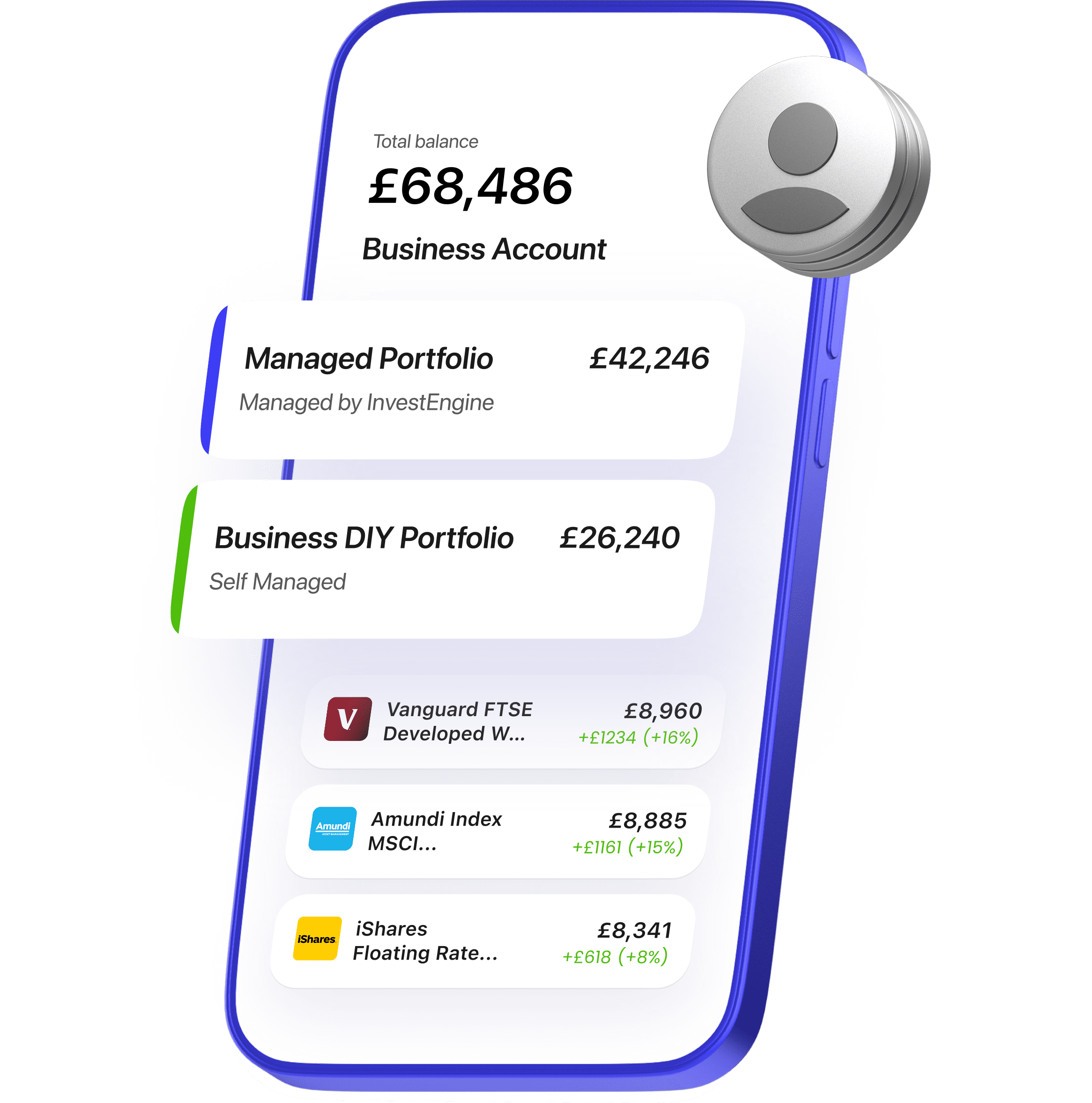
Put your business cash to work
Take advantage of powerfully simple business investing with InvestEngine. We make it easy to build and maintain a long-term investment portfolio that suits you and your business.
Find out moreCapital at risk. Ts&Cs apply
FAQs
Is a cash-flow forecast the same as a budget?
Not quite. A budget is a plan for income and expenses. A cash-flow forecast is about when cash actually moves.
Should I forecast using invoices or bank receipts?
Forecast using expected bank receipts timing. Invoices are the starting point, but you should adjust for how customers really pay.
How far ahead should I forecast?
At minimum, as long as your cash cycle. A 13-week view plus a 12-month view is a strong combination for most small businesses.
What’s the biggest mistake beginners make?
Assuming customers pay on time and forgetting the timing of VAT, payroll, and other lumpier costs.
When is it safe to invest surplus cash?
When you can meet obligations even if revenue dips, and the money you invest has an appropriate time horizon so you are not forced to sell at a bad time.
Important information
Capital at risk. The value of investments may go down as well as up, and you may get back less than you invest. Past performance is not indicative of future performance. ETF costs apply. Tax rules can change and any benefits depend on individual circumstances. If in doubt, consider professional advice.