


Asking prices for UK homes fell 2% this month — the steepest August drop since 2018 — taking around £7,360 off the average home, which now stands at £364,999 as the 2026 housing market shifts in buyers’ favour.
Annual prices are also down, falling 1% for the first time since December 2023.
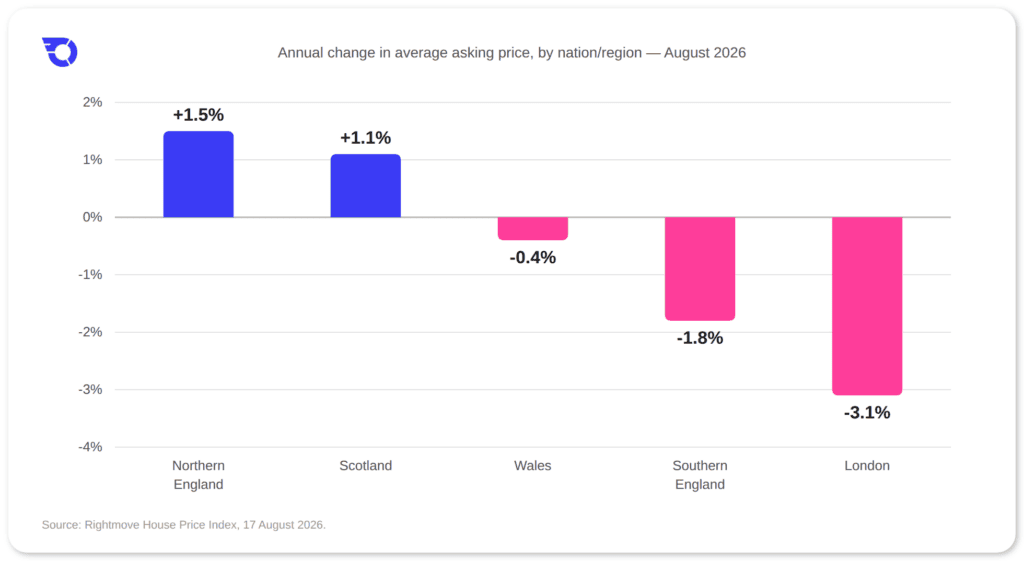
But it depends on where you live.
North holds up, South and London fall behind
What’s driving the house price falls?
The number of homes on the market are at a 12-year high and this is forcing sellers to price competitively from day one.
In what’s being dubbed the ‘Burnham bounce,’ buyer demand has actually risen 5% since Andy Burnham became PM on 20 July.
Unusually, this isn’t down to any policies or speeches. Instead, it looks more like goodwill from his pro-housing record as Greater Manchester mayor.
Normally, more buyer demand would push prices up. But that extra supply is still outpacing it, and overall buyer activity remains 10% below last year’s level, despite the recent bounce — which is why sellers are having to compete on price, suppressing house prices further.
Winners and losers: what’s next for house prices in 2026?
Right now we’re seeing better conditions for buyers (especially if you’re a first-time buyer), but it’s tougher for sellers, particularly in London, where house prices are down 3.1% annually.
And it doesn’t look like it’s going to get better any time soon for sellers.
Rightmove recently downgraded its full-year 2026 prediction to a range of 0% to −2%, down from the +2% growth it originally expected.
However, this is good news for first-time house buyers.
That’s because the amount you need to now save for a deposit has fallen… and InvestEngine is here to help.
How long could it take to save for a deposit, using overnight rate ETFs?
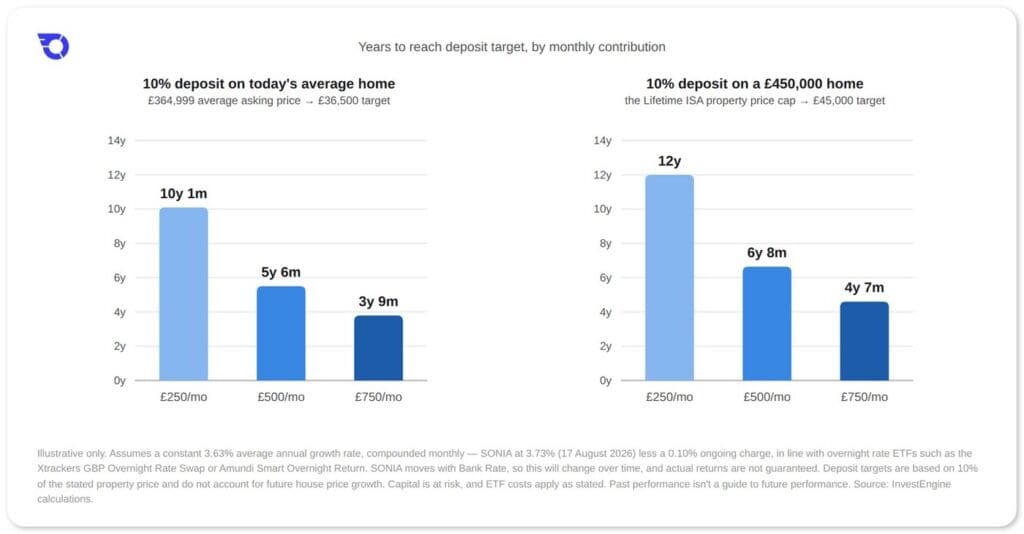
Should your deposit sit in cash or in the stock market?
If you’re planning on buying within the next three to five years, it might make more sense to think about holding your money in cash, or using cash-like products like overnight rate ETFs.
That’s because when you invest in the stock market, the value of your money is at the mercy of market movements. If markets fall, you risk losing a chunk of your deposit.
Overnight rate ETFs track the SONIA (Sterling Overnight Index Average) – this is the average interest rate banks charge each other for unsecured overnight loans in London and closely follows the Bank of England base rate.
While the SONIA can still rise and fall, with overnight rate ETFs you typically get the chance of earning an inflation-beating return, without having to worry about major market swings.
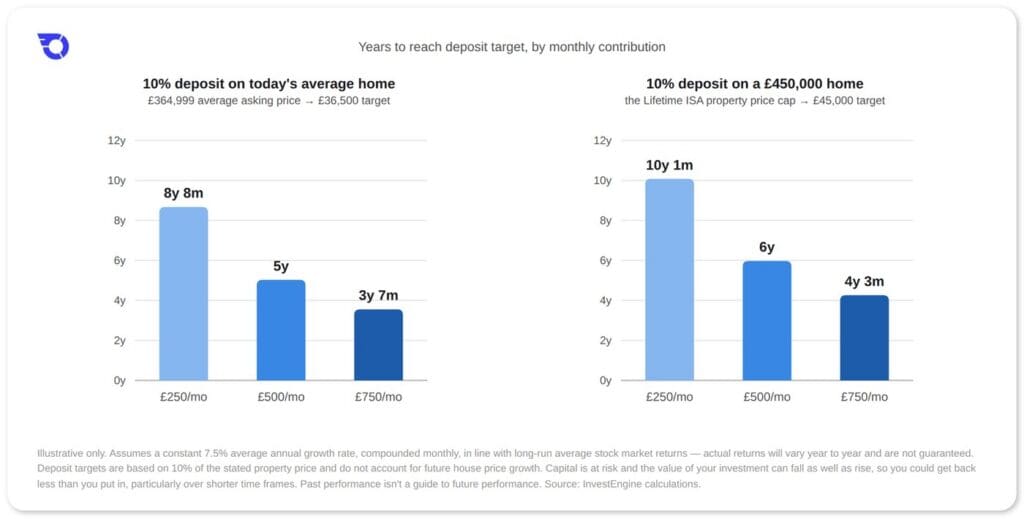
However, over the long term these market drops tend to matter less as, historically, markets have risen over time. So, if you’ve got a slightly longer time horizon before you buy a house, then it could be worth thinking about investing in the stock market.
How to build a low-cost ETF portfolio from £100
How long could it take to save for a deposit, investing in the stock market?
5 ETF ideas for a Stocks and Shares ISA
Lifetime ISA versus Stocks and Shares ISA: which one’s best to buy a house
The Lifetime ISA (LISA) is usually the best account to help save for a deposit to go towards your first house. That’s because every tax year you can put in up to £4,000 towards your first home, and the government will add a 25% bonus – up to £1,000 a year.
However, you can only open one if you’re between 18 and 39 years old and then only add money up until you turn 50. You also have to use the Lifetime ISA to buy a house under £450,000 or wait until you’re 60 to withdraw the money. If you withdraw your money for any other reason you’ll pay a 25% withdrawal penalty, meaning you could get back less than you put in.
The problem is this cap hasn’t changed since the Lifetime ISA was introduced, but house prices have drastically increased.
And for lots of areas, houses will be worth much more than £450,000.
It’s why so many are now using Stocks and Shares ISAs to save towards buying a house.
You don’t get the added bonus that comes with a LISA, but you still get the tax perks and you won’t pay any penalties to take your money out.
And with an InvestEngine Stocks and Shares ISA you won’t pay any platform fees, giving your money even more chance to grow.
Important information
Capital at risk. Unlike cash, when you invest the value of your investments may go down as well as up, and you may get back less than you invest. Past performance is not indicative of future performance.
ETF costs apply. Remember, ISA and tax rules can change and any benefits depend on individual circumstances. This article isn’t personal advice. If in doubt, you may wish to consult a professional adviser for guidance.