

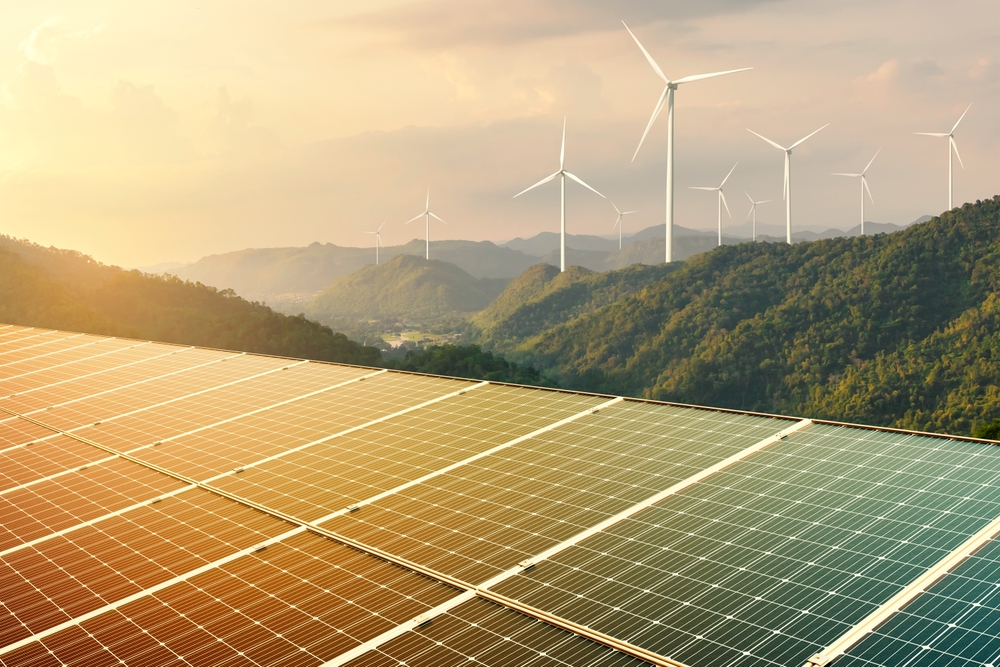
Thematic investing means investing in long-term trends, industries or ideas that could shape the future. Instead of investing by country or broad market index, thematic investors focus on themes such as artificial intelligence, clean energy, robotics, healthcare innovation or cybersecurity.
This guide explains how thematic investing works, how thematic ETFs can be used, what to consider before investing and the risks investors should understand.
Capital at risk. The value of your investments can go down as well as up, and you may get back less than you invest. This article is for general information only and is not personal advice.
Thematic investing: a snapshot
| Question | Short answer |
|---|---|
| What is thematic investing? | Investing in long-term trends or themes |
| What are examples? | AI, clean energy, robotics, biotechnology, cybersecurity and digitalisation |
| How can investors access themes? | Often through thematic ETFs |
| Is it diversified? | It depends on the ETF, but thematic funds are usually more focused than broad market ETFs |
| Is it high risk? | It can be, because themes may be concentrated and volatile |
Thematic investing can help investors target areas they believe may grow over time, but it should usually be considered as part of a wider, diversified portfolio rather than a complete strategy on its own.
What is thematic investing?
Thematic investing focuses on big structural trends rather than traditional categories such as country, region or company size.
A traditional ETF might track the FTSE 100, S&P 500 or FTSE All-World. A thematic ETF might instead focus on companies linked to a specific theme, such as artificial intelligence, clean energy, robotics, biotechnology or defence technology.
The idea is to invest in businesses that may benefit if a long-term trend continues to grow. For example, an AI-themed ETF may hold companies involved in semiconductors, cloud computing, software or automation. A clean energy ETF may hold companies linked to renewable power, energy storage or grid infrastructure.
Thematic investing is not about predicting next week’s market move. It is usually a long-term approach based on the belief that certain trends could become more important over years or decades.
How thematic ETFs work
Thematic ETFs package a group of companies linked to a theme into one fund. This gives investors exposure to the theme without needing to choose individual shares.
Some thematic ETFs track an index created around a specific theme. Others may use more active or rules-based selection. The ETF provider decides how companies qualify for inclusion, how the fund is weighted and how often the holdings are reviewed.
This makes the index methodology or investment process especially important. Two ETFs with similar theme names can hold very different companies. For example, one AI ETF might focus heavily on semiconductor companies, while another might include software, automation and cloud infrastructure.
Before investing, investors should check:
- What the theme actually includes
- Which companies the ETF holds
- Whether the ETF is concentrated in a few large names
- The ongoing charge
- The countries and sectors included
- Whether the ETF overlaps with funds already in the portfolio
Examples of thematic investing
Thematic investing can cover many areas. Common examples include:
| Theme | What it may focus on |
|---|---|
| Artificial intelligence | Semiconductors, software, automation and cloud computing |
| Clean energy | Renewable power, energy storage and energy infrastructure |
| Robotics | Automation, industrial technology and manufacturing innovation |
| Cybersecurity | Companies providing digital security products and services |
| Biotechnology | Drug development, healthcare innovation and medical research |
| Defence technology | Aerospace, defence systems and security-related technology |
| Digitalisation | E-commerce, payments, cloud infrastructure and online services |
These themes can be exciting, but investors should avoid assuming that a strong story automatically leads to strong investment returns. A theme can be important and still produce disappointing returns if valuations are too high, competition is intense or profits take longer than expected to appear.
For investors who want to explore specific themes in more detail, these guides look at individual areas of the thematic ETF market:
These supporting articles can help readers move from the broad concept of thematic investing into more detailed examples of how particular themes are represented through ETFs.
Why investors use thematic ETFs
Thematic ETFs can give investors a way to express a long-term view. If an investor believes a trend could grow over time, a thematic ETF can provide diversified access to companies linked to that trend.
They can also make portfolios more personal. Some investors want their portfolio to reflect areas they understand, work in or believe will shape the future. Thematic ETFs can offer a structured way to do this without relying on one or two individual shares.
Thematic ETFs may appeal to investors who want:
- Exposure to long-term growth trends
- A focused addition to a broader portfolio
- Access to specialist sectors
- A way to invest in themes without choosing individual companies
- Portfolio tilts beyond broad market indices
However, thematic ETFs are usually better used as satellite holdings than as the whole portfolio. A broad global ETF may provide diversified core exposure, while thematic ETFs can add targeted exposure around the edges.
Thematic investing vs broad market investing
Broad market investing and thematic investing serve different roles.
| Approach | Main focus | Typical role |
|---|---|---|
| Broad market investing | Large parts of the stock market | Core portfolio exposure |
| Thematic investing | A specific trend, sector or idea | Satellite or targeted exposure |
| Single-stock investing | One company | Highly focused exposure |
A broad global ETF may hold thousands of companies across countries and sectors. A thematic ETF may hold a smaller group of companies linked to one idea. This can increase growth potential if the theme performs well, but it can also increase risk if the theme falls out of favour.
Many investors use broad market ETFs as the foundation of a portfolio and thematic ETFs as smaller additions. This can help keep the portfolio diversified while still allowing exposure to specific long-term trends.
How to choose a thematic ETF
Choosing a thematic ETF requires more than picking a theme that sounds interesting. Investors need to understand how the ETF turns that theme into a portfolio.
1. Define the theme clearly
Some themes are broad, while others are narrow. “Technology” is broad. “Semiconductors” is more specific. “AI infrastructure” may be narrower still.
A narrower theme can offer more targeted exposure, but it may also be more volatile.
2. Check the holdings
Look at the companies inside the ETF. Do they match the theme? Are they pure-play companies, or large businesses where the theme is only a small part of revenue?
This matters because some thematic ETFs may include companies that are only loosely connected to the theme.
3. Watch for overlap
Thematic ETFs often hold companies already found in broad global or US equity ETFs. If an investor already owns those companies through a core ETF, adding a thematic ETF may increase concentration.
4. Compare costs
Thematic ETFs can be more expensive than broad market ETFs. Higher charges do not automatically make them unsuitable, but investors should understand the cost and whether the exposure is worth paying for.
5. Think about position size
Because thematic ETFs can be volatile, investors may choose to keep them as a smaller part of the overall portfolio. The right size depends on risk appetite and conviction in the theme.
Risks of thematic investing
Thematic investing can be higher risk than broad market investing.
- Concentration risk: thematic ETFs may focus on a small number of sectors or companies.
- Valuation risk: popular themes can become expensive.
- Hype risk: strong narratives can attract investors before profits justify valuations.
- Timing risk: a theme may take longer to develop than expected.
- Overlap risk: thematic ETFs may duplicate holdings already owned elsewhere.
- Policy risk: themes such as clean energy or defence can be affected by regulation and government spending.
- Currency risk: global thematic ETFs can be affected by exchange rates.
Thematic investing can be useful, but it should be approached with realistic expectations. Even long-term trends can experience sharp setbacks.
How to invest in thematic ETFs with InvestEngine
InvestEngine is a UK-based ETF investing platform, authorised and regulated by the Financial Conduct Authority, built for long-term investors who want to create DIY ETF portfolios.
With InvestEngine, you can buy and sell thematic ETFs with 0% dealing fees and 0% platform fee on DIY portfolios. ETF costs apply.
InvestEngine’s Thematic Collection includes ETFs with exposure to themes such as robotics, digitalisation and clean energy, helping investors explore areas they believe may shape the future.
You can invest through:
- A Stocks and Shares ISA
- A Self-Invested Personal Pension
- A General Investment Account
- A Business Investment Account
FAQs about thematic investing
What is thematic investing?
Thematic investing means investing in companies linked to long-term trends, such as artificial intelligence, clean energy, robotics or cybersecurity.
What is a thematic ETF?
A thematic ETF is an exchange-traded fund that invests in companies connected to a specific theme.
Is thematic investing risky?
Yes. Thematic investing can be more volatile than broad market investing because it is often concentrated in specific sectors or trends.
Are thematic ETFs suitable for beginners?
They may be suitable for some beginners as a smaller part of a diversified portfolio, but investors should understand the theme, holdings and risks first.
What is the difference between thematic investing and sector investing?
Sector investing focuses on a traditional sector such as technology or healthcare. Thematic investing focuses on a trend that may cut across several sectors.
Can I hold thematic ETFs in an ISA?
Yes, eligible thematic ETFs can be held in a Stocks and Shares ISA.
Does InvestEngine charge dealing fees for thematic ETFs?
InvestEngine charges 0% dealing fees for buying and selling ETFs. DIY portfolios also have 0% platform fees. ETF costs apply.
In summary
Thematic investing gives investors a way to target long-term trends such as AI, clean energy, robotics and biotechnology. Thematic ETFs can make this easier by grouping companies linked to a theme into one fund.
These ETFs can be useful portfolio additions, but they are usually more focused and volatile than broad market funds. Before investing, check the holdings, costs, overlap and risks, and consider how the theme fits within a wider diversified portfolio.
Capital at risk. ETF costs apply. Tax treatment depends on your personal circumstances and may change in future. This communication is for general information only and does not constitute personal advice.