

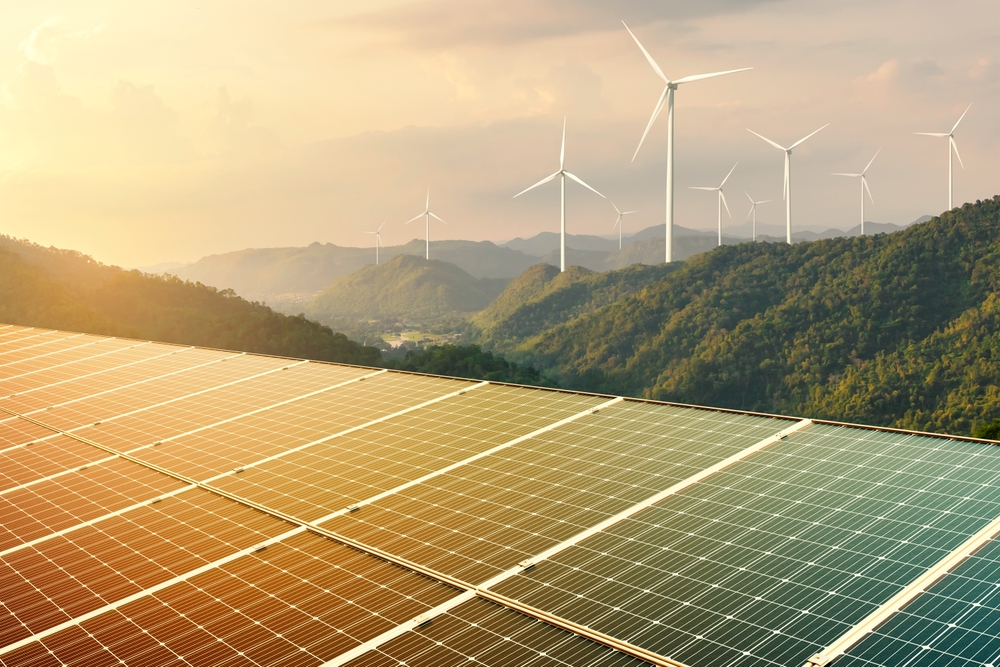
Clean energy ETFs give investors a way to invest in companies involved in renewable power, low-carbon technology and the wider energy transition through a single fund.
This guide looks at five of the top clean energy ETFs on InvestEngine in 2026, based on the most held clean energy ETFs on the platform. It explains what clean energy ETFs are, how they work, what each ETF gives investors exposure to and the main risks to consider.
Capital at risk. The value of your investments can go down as well as up, and you may get back less than you invest. This article is for general information only and is not personal advice.
Top clean energy ETFs for UK investors: quick answer
Here are five of the top clean energy ETFs on InvestEngine.*
| Clean energy ETF | Ticker | Suitable for investors looking for |
|---|---|---|
| L&G Clean Energy ETF | RENG | Global renewable energy and clean technology exposure |
| iShares Global Clean Energy ETF | INRG | Broad global clean energy exposure |
| WisdomTree Renewable Energy ETF | WREN | Global renewable energy exposure across several technologies |
| Invesco Solar Energy ETF | RAYS | Focused solar energy exposure |
| Global X Renewable Energy Producers | RNRU | Access to renewable energy companies involved in practical tech |
*This list of “Top ETFs” is based on the most held clean energy ETFs on InvestEngine’s platform. Top ETFs have been calculated by most bought, by number of clients, between August 2025 and August 2026.
What are clean energy ETFs?
Clean energy ETFs are investment funds that hold shares in companies working in renewable energy, low-carbon infrastructure and clean technology.
These funds often include companies involved in:
- Renewable power generation, such as solar, wind, hydro and geothermal
- Clean technology manufacturing, such as solar panels, wind turbines and batteries
- Grid and storage solutions, such as smart grids, energy storage and hydrogen
- Low-carbon infrastructure and utilities
- Carbon markets or companies linked to the wider energy transition
Instead of choosing individual solar, wind or battery companies, investors can buy one ETF and gain exposure to a basket of clean energy-related businesses.
Why clean energy ETFs remain popular with UK investors in 2026
Clean energy ETFs remain popular with some UK investors because they offer access to a long-term investment theme: the shift towards lower-carbon energy systems.
The main reasons investors choose clean energy ETFs
- Energy transition exposure: Clean energy ETFs give investors access to companies involved in renewable power and low-carbon technologies.
- Policy support: Governments around the world, including the UK, continue to target lower-carbon energy systems and net-zero goals.
- ESG demand: Some investors want funds that align more closely with sustainability or climate-related themes.
- ISA and SIPP eligibility: Eligible ETFs can be held in tax-efficient accounts such as Stocks and Shares ISAs and SIPPs.
- Portfolio diversification: Clean energy ETFs can offer exposure outside traditional oil and gas companies, although they can still be volatile.
This does not mean clean energy ETFs are low risk. The sector can be affected by policy changes, interest rates, commodity prices, supply chains and investor sentiment.
How to choose a clean energy ETF
The right clean energy ETF depends on the part of the energy transition you want exposure to, how much risk you are comfortable taking and how the fund fits with the rest of your portfolio.
| For investors seeking… | They might consider… | Example ETFs |
|---|---|---|
| Broad clean energy exposure | Diversified clean energy ETFs | INRG, RENG |
| Renewable energy exposure | Renewable energy ETFs | WREN |
| Hydrogen exposure | Hydrogen-focused ETFs | ANRJ |
| Solar exposure | Solar-focused ETFs | RAYS |
| Lower ongoing charges | Passive ETFs with lower OCFs | ANRJ, WREN, RENG |
| Income payments | Distributing ETFs | INRG |
This table is not a recommendation. It simply shows how different clean energy ETFs can play different roles in a portfolio.
The 5 top clean energy ETFs in 2026
With many clean energy ETFs available, it helps to understand how each fund approaches the theme.
Some funds offer broad clean energy exposure, while others focus more narrowly on areas such as hydrogen, solar or renewable energy producers.
1. L&G Clean Energy ETF (RENG)
L&G Clean Energy ETF (RENG) tracks the Solactive Clean Energy Index.
It invests in companies around the world involved in renewable power and clean technology.
Provider: Legal & General Investment Management
Strategy: Passive ETF tracking the Solactive Clean Energy Index
Why investors might consider it
- Offers global exposure to renewable energy and clean technology companies
- Has lower ongoing charges than some other clean energy ETFs
- Provides diversified access to the clean energy theme
| Key detail | RENG |
|---|---|
| Launched | 11 November 2020 |
| Fund size | £579m |
| Ongoing charges | 0.49% |
| Dividend type | Accumulating |
| Region focus | Global |
Source: Bloomberg. Correct as of 13/08/26.
Useful for: investors looking for diversified clean energy exposure with accumulating dividends.
2. iShares Global Clean Energy ETF (INRG)
iShares Global Clean Energy ETF (INRG) is a UCITS-compliant ETF that physically replicates the S&P Global Clean Energy Index.
It gives investors exposure to companies involved in solar, wind and other renewable energy sectors worldwide.
Provider: BlackRock (iShares)
Strategy: Passive ETF tracking the S&P Global Clean Energy Index
Why investors might consider it
- One of the larger and more established clean energy ETFs
- Offers broad exposure to renewable energy companies worldwide
- Provides a simple route into the global clean energy theme
| Key detail | INRG |
|---|---|
| Launched | July 2007 |
| Fund size | £2,758m |
| Ongoing charges | 0.65% |
| Dividend type | Distributing |
| Region focus | Global |
Source: Bloomberg. Correct as of 13/08/26.
Useful for: investors looking for broad global clean energy exposure.
3. WisdomTree Renewable Energy ETF (WREN)
WisdomTree Renewable Energy ETF (WREN) provides targeted exposure to companies involved in the development, production and use of renewable energy sources.
It includes companies across several areas of renewable energy, including solar, wind, hydro and other sustainable energy technologies.
Provider: WisdomTree
Strategy: Passive ETF focused on renewable energy companies
Why investors might consider it
- Gives exposure to several parts of the renewable energy sector
- Takes a global approach with less of a US tilt than some clean energy ETFs
- Has one of the lower ongoing charges among the ETFs covered here
| Key detail | WREN |
|---|---|
| Launched | 13 June 2023 |
| Fund size | £30m |
| Ongoing charges | 0.45% |
| Dividend type | Accumulating |
| Region focus | Global |
Source: Bloomberg. Correct as of 13/08/26.
Useful for: investors looking for global renewable energy exposure.
4. Invesco Solar Energy ETF (RAYS)
Invesco Solar Energy ETF (RAYS) tracks the MAC Global Solar Energy Index using full physical replication.
It gives investors focused exposure to companies involved in the development, production and installation of solar energy technologies.
Provider: Invesco
Strategy: Passive ETF tracking a global solar energy index
Why investors might consider it
- Offers focused exposure to the solar energy sector
- Uses ESG screening and physical replication
- May suit investors looking for a more concentrated clean energy theme
| Key detail | RAYS |
|---|---|
| Launched | 9 September 2021 |
| Fund size | £157m |
| Ongoing charges | 0.69% |
| Dividend type | Accumulating |
| Region focus | Global solar companies |
Source: Bloomberg. Correct as of 13/08/26.
Useful for: investors looking for targeted solar energy exposure.
5. Global X Renewable Energy Producers
Global X Renewable Energy Producers (RNRU) tracks the Indxx Renewable Energy Producers v2 Index.
It is designed to track the performance of companies that produce energy from renewable sources such as wind, solar, hydroelectric, geothermal, and biofuels.
Provider: Global X
Strategy: Passive ETF designed to track the performance of the Indxx Renewable Energy Producers v2 Index
Why investors might consider it
- Offers exposure to those building renewable solutions
- At the forefront of renewable energy developments
- Aims to capture the growth potential of whole industries focused on cleaner energy alternatives
| Key detail | RNRU |
|---|---|
| Launched | 7 December 2021 |
| Fund size | £8m |
| Ongoing charges | 0.50% |
| Dividend type | Accumulating |
| Region focus | Global |
Source: Bloomberg. Correct as of 13/08/26.
Useful for: investors looking to invest in the future of renewable energy.
Comparing the top 5 clean energy ETFs side by side
Each ETF offers a different route into clean energy investing. Some take a broad approach across renewable energy companies, while others focus more narrowly on hydrogen or solar.
| ETF name | Ticker | Strategy | OCF | Dividend type | Launched | Region focus | Fund size |
|---|---|---|---|---|---|---|---|
| L&G Clean Energy | RENG | Passive | 0.49% | Accumulating | 11 Nov 2020 | Global | £579m |
| iShares Global Clean Energy | INRG | Passive | 0.65% | Distributing | Jul 2007 | Global | £2,758m |
| WisdomTree Renewable Energy | WREN | Passive | 0.45% | Accumulating | 13 Jun 2023 | Global | £30m |
| Invesco Solar Energy | RAYS | Passive | 0.69% | Accumulating | 9 Sep 2021 | Global solar companies | £157m |
| Global X Renewable Energy Producers | RNRU | Passive | 0.50% | Accumulating | 7 Dec 2021 | Global | £8m |
Source: Bloomberg. Correct as of 13/08/26.
More clean energy ETFs
The top 5 list covers some of the most popular clean energy-focused ETFs on InvestEngine, but there are other funds that may suit different goals.
Invesco Global Clean Energy ETF (GCLX)
Invesco Global Clean Energy ETF (GCLX) offers exposure to a global basket of clean energy companies. It is physically replicated and ESG-screened.
SparkChange Physical Carbon EUA ETC (CO2P)
SparkChange Physical Carbon EUA ETC (CO2P) tracks EU carbon allowances directly, giving investors exposure to Europe’s emissions trading system.
Guinness Sustainable Energy ETF (CLMP)
Guinness Sustainable Energy ETF (CLMP) is actively managed and combines renewable power with efficiency and technology companies.
ETFs featured above may include paid partners.
Risks of investing in clean energy ETFs
Clean energy ETFs can offer exposure to a long-term investment theme, but they can also be volatile and concentrated.
Key risks to consider
- Policy risk: Renewable energy companies can be affected by changes to subsidies, tax credits and government policy.
- Interest-rate sensitivity: Clean energy projects can be capital intensive, so higher borrowing costs may affect profitability and valuations.
- Thematic concentration: Clean energy ETFs may be less diversified than broad global equity ETFs.
- Technology risk: Some technologies, such as hydrogen or battery storage, are still developing.
- Commodity and supply-chain risk: Clean energy companies can be affected by raw material prices and supply-chain disruption.
- Valuation risk: Popular clean energy companies can trade at high valuations, which may increase downside risk.
- Smaller fund risk: Some thematic ETFs have lower assets under management, which can affect liquidity.
As always, make sure any investment fits your own goals, timeline and comfort with risk.
Key factors to consider when choosing a clean energy ETF
Not all clean energy ETFs are built the same. Before investing, it can help to look at five areas.
1. Understand the ETF’s focus
Some ETFs lean heavily into solar or hydrogen, while others spread exposure across broader themes such as renewables, smart grids, batteries or low-carbon utilities.
Reviewing the index, strategy and top holdings can help you see whether the fund matches the exposure you expect.
2. Look at geographic exposure
Some clean energy ETFs are global, while others may lean more heavily towards the US, Europe or Asia.
Geography can affect both growth potential and risk because energy policy, regulation and subsidies vary by region.
3. Compare fund size and liquidity
Larger ETFs with more assets under management often trade more smoothly and with tighter spreads, which can lower the cost of buying and selling.
Smaller funds may still be useful, but investors should understand the potential liquidity risks.
4. Compare ongoing charges
Even small differences in charges can affect returns over time.
Compare the OCF or TER to see whether the fund offers good value for its strategy.
5. Check how it fits with your portfolio
Clean energy ETFs can be useful for thematic exposure, but they should still fit with your overall portfolio.
Consider whether the ETF adds diversification, increases concentration or overlaps with funds you already hold.
Clean energy ETF performance trends and outlook
Clean energy ETFs can move in different directions depending on their holdings, geography and theme.
Past performance is not a reliable indicator of future returns, but investors often watch a few key drivers:
- Renewable energy demand: Demand for clean power, storage and electrification can support the sector over the long term.
- Policy changes: Clean energy companies can be sensitive to changes in subsidies, tax credits and climate policy.
- Interest rates: Higher interest rates can weigh on capital-intensive clean energy companies.
- Technology development: Areas such as hydrogen, storage and solar can be affected by how quickly technologies scale.
- Carbon prices: Carbon-linked funds can be influenced by emissions trading schemes and regulatory change.
Outlook for 2026
Clean energy may continue to benefit from long-term demand for renewable power and electrification, but performance is likely to remain uneven across themes.
Broad clean energy funds may behave differently from more focused solar, hydrogen or carbon-linked funds. Investors should understand what each ETF holds before investing.
How to buy clean energy ETFs with InvestEngine
InvestEngine is a UK-based ETF investing platform, authorised and regulated by the Financial Conduct Authority, built for long-term investors who want to create DIY ETF portfolios.
With InvestEngine, you can buy and sell clean energy ETFs with 0% dealing fees and 0% platform fee on DIY portfolios. ETF costs apply.
You can invest through:
- A Stocks and Shares ISA
- A Self-Invested Personal Pension
- A General Investment Account
- A Business Investment Account
How it works
- Create an InvestEngine account
- Choose your account type — ISA, SIPP, GIA or Business Account
- Search for the clean energy ETF you want
- Choose how much to invest
- Set up a one-off investment or a regular Savings Plan
Why use InvestEngine?
✅ 0% dealing fees and 0% platform fee on DIY portfolios
Buy and sell clean energy ETFs with 0% dealing fees and 0% platform fee on DIY portfolios. ETF costs apply.
✅ Wide ETF choice
Access the clean energy ETFs covered in this article, plus a wide range of other ETFs across markets, sectors and themes.
✅ Regular investing
Set up a Savings Plan to invest regularly. Just choose how often and how much you want to invest.
✅ Your choice of account
Invest through an ISA, SIPP, GIA or Business Account.
Start investing in clean energy ETFs with InvestEngine
Capital at risk. T&Cs apply.
FAQs about clean energy ETFs
What are the top clean energy ETFs for UK investors?
The right clean energy ETF depends on your goals, risk appetite and investment timeframe. Popular clean energy ETFs on InvestEngine include L&G Clean Energy (RENG), iShares Global Clean Energy (INRG), WisdomTree Renewable Energy (WREN), Invesco Solar Energy (RAYS) and Global X Renewable Energy Producers (RNRU).
What is a clean energy ETF?
A clean energy ETF is an exchange-traded fund that invests in a basket of companies linked to renewable energy, low-carbon technology or the wider energy transition. These may include companies involved in solar, wind, hydrogen, batteries, grids, utilities and clean technology manufacturing.
Are clean energy ETFs risky?
Yes, clean energy ETFs can be risky. They may be more concentrated than broad global ETFs and can be affected by policy changes, interest rates, commodity prices and technology trends. Their value can rise and fall quickly, and investors could get back less than they put in.
Can you buy clean energy ETFs in a Stocks and Shares ISA?
Yes. Eligible clean energy ETFs can be held in a Stocks and Shares ISA. Investing through an ISA can help protect returns from UK capital gains tax and dividend tax.
Can you buy clean energy ETFs in a SIPP?
Yes. Eligible clean energy ETFs can be held in a Self-Invested Personal Pension, or SIPP. SIPPs are designed for long-term retirement investing and come with specific rules on access, tax relief and withdrawals.
Does InvestEngine charge dealing fees for clean energy ETFs?
InvestEngine charges 0% dealing fees for buying and selling ETFs. DIY portfolios also have 0% platform fees. ETF costs apply.
Are clean energy ETFs suitable for beginners?
Clean energy ETFs may be suitable for some beginners, but only if they understand the risks. They can provide diversified exposure to a theme, but they can still fall in value and may be more volatile than broader ETFs.
In summary
Clean energy ETFs give UK investors a way to invest in companies linked to renewable power, low-carbon technology and the wider energy transition.
Some of the top clean energy ETFs on InvestEngine include RENG for clean energy and clean technology exposure, INRG for broad global clean energy exposure, WREN for renewable energy exposure, RAYS for solar exposure and RNRU for renewable energy producer exposure.
With InvestEngine, you can invest in clean energy ETFs through an ISA, SIPP, GIA or Business Account, with 0% dealing fees and 0% platform fee on DIY portfolios. ETF costs apply.
Clean energy may be a powerful long-term theme, but clean energy ETFs can still be volatile and concentrated. Before investing, make sure the ETF fits your goals, risk appetite and wider portfolio.
Capital at risk. The value of your investments with InvestEngine can go down as well as up. You may get back less than you invest. Past performance is not a reliable indicator of future results.
ETF costs apply. This communication is for general information only and does not constitute personal advice.
Tax treatment depends on your personal circumstances and may change in future.