


From 6 April 2026, the State Pension will rise by 4.7%.
If you’re eligible for the full new State Pension, you’ll receive £241.30 a week – up from £230.25 in 2025/26.
How much you get depends on your eligibility and your National Insurance (NI) record. You’ll qualify for the new State Pension if you are:
- a man born on or after 6 April 1951
- a woman born on or after 6 April 1953
To receive the full amount, you’ll typically need 35 qualifying years of National Insurance contributions.
If you’re on the older basic State Pension, payments will rise to £184.90 a week (from £176.45). This applies if you are:
- a man born before 6 April 1951
- a woman born before 6 April 1953
To receive the full basic State Pension, you’ll usually need 30 years of National Insurance contributions.
State Pension increase 2026: why is it rising?
At the start of each tax year (6 April), the State Pension increases. How much it rises is determined by whichever is highest of three measures: inflation (CPI from the previous September), average earnings growth (May to July), or 2.5%. This is known as the triple lock.
What happens if you have gaps in your National Insurance record?
If you have gaps in your NI record it means you might not get the full State Pension.
However, there are ways you can fill them.
Voluntary NI contributions explained
You can choose to pay voluntary NI contributions to fill gaps in your record.
In most cases, you can go back up to six tax years (although this can vary depending on your circumstances).
Each additional qualifying year typically adds around 1/35th of the full new State Pension – currently worth roughly £358 a year.
When filling gaps may not increase your pension
However, before you make any voluntary contributions, it’s worth checking with the Future Pension Centre whether you’ll actually benefit, as in some cases filling gaps won’t increase your State Pension – particularly if you were contracted out of the State Second Pension.
But there are also other ways to fill any NI gaps.
How to get free NI credits (Child Benefit, Universal Credit)
If you had a gap in your NI record, you might have been eligible for benefits that come with NI credits at the time, like Child Benefit or Universal Credit.
In some cases, you can backdate a claim and have those credits added for free.
Is the State Pension enough to retire on?
The Retirement Living Standards put the cost of living a ‘moderate’ retirement at £31,700 a year for one person, and £43,900 for a couple.
They suggest a ‘moderate’ retirement would offer more financial security and flexibility than the ‘minimum’, which is set at £13,400 and £21,600 respectively. You’d be able to afford an annual overseas holiday, a long weekend off peak break in the UK, and a take-away a week and eating out a couple of times a month.
For a ‘comfortable’ retirement, you’d need £43,900 for a single person and £60,600 as a couple. This would allow you to have more spontaneity than the ‘moderate’ lifestyle, including extra-long weekends away in the UK, some day trips, and extra spending allowance on eating out and social activities.
At around £12,500 a year, the new full State Pension falls short of these standards, but it also doesn’t even reach the ‘minimum’ standard, which requires £13,400 for one person.
So what can you do?
How to boost your retirement income beyond the State Pension
Make the most of your workplace pension
One of the most effective ways to boost your retirement savings is to make the most of your workplace pension.
Under auto-enrolment, you’ll typically contribute 5% of your salary, with your employer adding at least 3%. But this is just the minimum. Many employers offer more generous contributions, so it’s worth checking what’s available to you.
In some cases, employers will even match any additional contributions you make. That means increasing how much you’re putting into your pension can help bolster your retirement savings – with extra money coming directly from your employer.
How pension tax relief boosts your retirement savings
Private pensions, like the InvestEngine Self-Invested Personal Pension, can also be a great way to help build your retirement savings.
When you pay into a pension, like the SIPP, you get tax relief on the money you put in. This means that your contributions are boosted by a payment from the government.
For basic-rate taxpayers (20%), contributions you make receive basic-rate income tax relief.
Here’s what that could actually look like.
If you contribute a lump sum of £8,000 into your SIPP, you’ll get tax relief of £2,000 from the government. This means a total of £10,000 is added to your SIPP.
However, if you’re a higher-rate (40%) taxpayer, you can also claim extra tax relief. This is of up to £2,000, through your self-assessment tax return, and up to £2,500 if you’re an additional-rate (45%) taxpayer.
This means you effectively receive an immediate boost on any money you contribute to your SIPP.
But on top of the generous tax relief, you also benefit from not having to pay any capital gains tax. And you won’t have to pay income tax on any growth until you decide to access it.
Just remember though, you can’t usually access your SIPP until age 55 (rising to 57 from 2028), and for most people, annual contributions are capped at £60,000. However, higher earners with incomes above £200,000 may see this allowance reduced to as little as £10,000 under the tapered annual allowance.
Track down lost pensions and bring them together
The average UK worker will hold 9 jobs during their lifetime and work for 6 different employers.
We recently asked investors how many pension pots they had. Over half of people said they had between two and three, 15% said they had four or more, and 6% weren’t sure at all.
Finding lost pensions and bringing them all under one roof can make things easier to manage. It means you don’t have to juggle lots of different login details and you can get a better sense of if you’re on track for the retirement you want.
How to find and combine old pension pots
A good place to start is thinking about all of the places you’ve worked at in the past. Do you have pensions for those places, even if you worked there for a short timeframe or even part-time?
If you find any gaps then you can use the government’s Pension Tracing Service to help you track down any lost pots. It won’t tell you if you have any lost pots, but they can provide you with the contact details you need to contact the relevant pension providers.
You can also call the Pension Tracing Service on 0800 731 0175 – Monday to Friday, 10am to 3pm.
How to transfer your pension to InvestEngine
Transfer your pensions to InvestEngine and get up to £5,000
Got pensions that you want to bring under one roof?
Not only are we now accepting more pension transfers from almost all the major pension providers, but we’re also currently offering up to £5,000 cashback when you transfer to us.
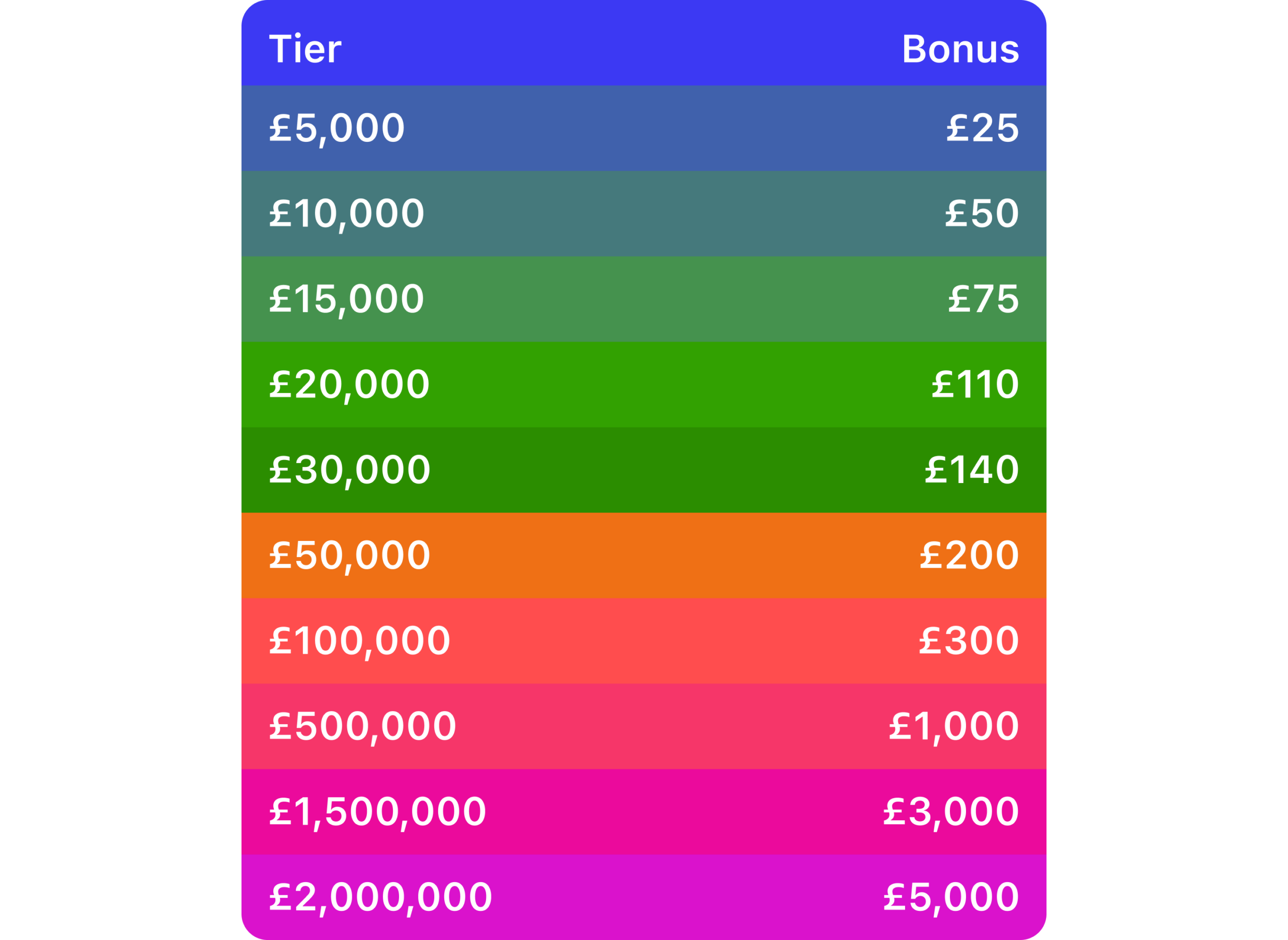
Get up to £5,000 when you transfer
It’s easy to transfer your SIPP to InvestEngine for fee-free investing. You could also get up to £5,000 when you do switch. ETF costs apply. The bonus is tiered and requires your investment to remain invested for at least 12 months.
Find out moreCapital at risk. Ts&Cs apply
Before transferring, please review any fees, exit costs and whether your existing investments would need to be sold and reinvested into ETFs. It’s also worth making sure you won’t be losing out on any valuable benefits like guaranteed annuity rates. And if you’re on a final salary pension, it usually doesn’t make sense to transfer it because of the guaranteed income on offer.
Important information
Capital at risk. The value of your investments may go down as well as up, and you may get back less than you invest.
ETF costs apply. Remember, pension and tax rules can change and any benefits depend on individual circumstances. If in doubt, you may wish to consult a professional adviser for guidance.