

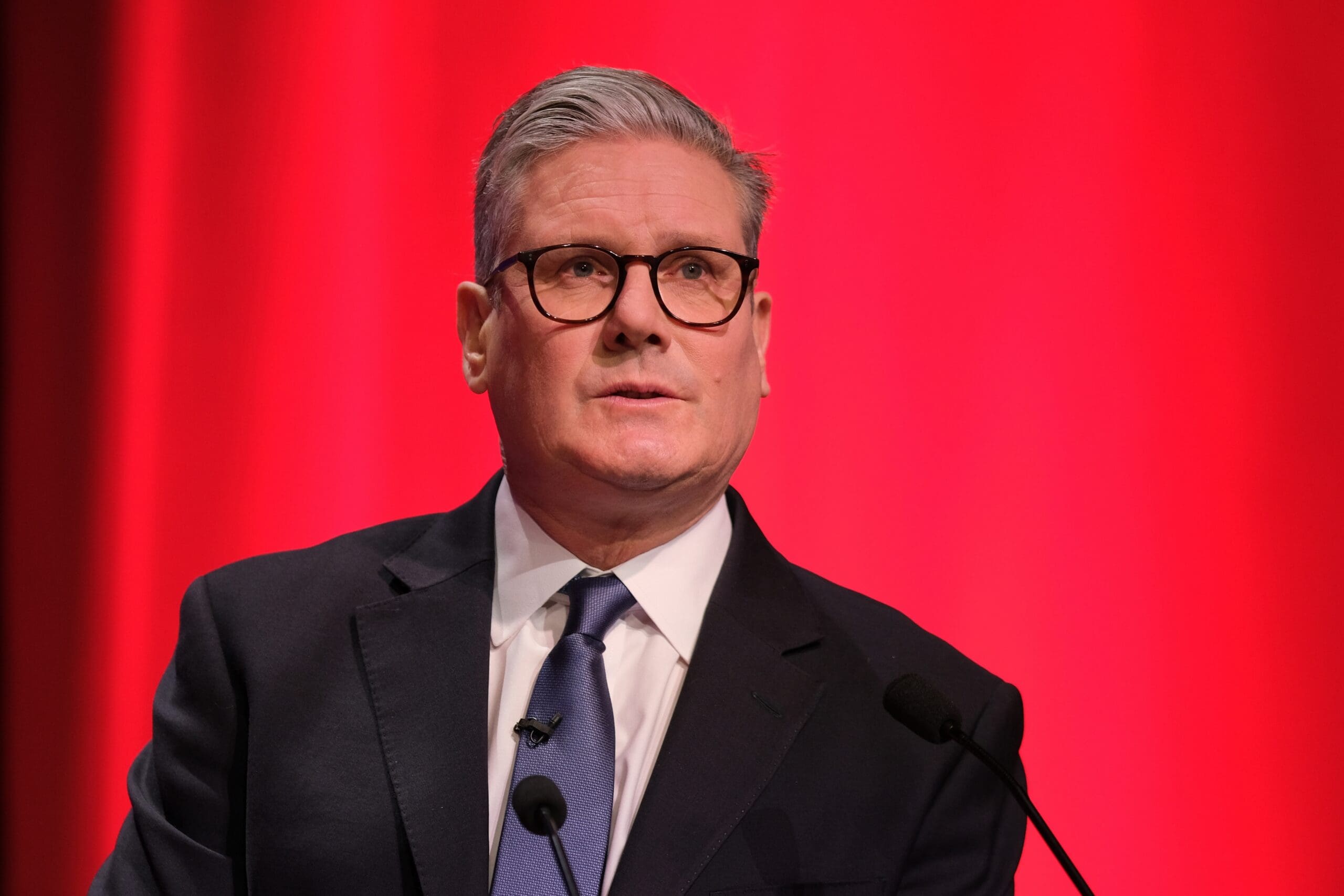
Sir Keir Starmer has resigned as prime minister, bowing to mounting pressure from within his Labour party. His departure follows Andy Burnham’s win in the Makerfield by-election, which returned the Greater Manchester mayor to parliament and cleared his path to a leadership bid.
It caps months of pressure that intensified after Labour’s heavy losses in May’s local election results — the party lost more than 30 councils and almost 1,500 councillors — and a wave of ministerial resignations, including former Health Secretary Wes Streeting.
For long-term investors, the question now isn’t whether Starmer goes, but who replaces him, and what that means for gilts (UK government bonds), the pound and your portfolio.
Here’s what you need to know.
What happens now Keir Starmer has gone?
Starmer’s departure triggers a Labour leadership contest. Because Labour holds a Commons majority, whoever wins becomes the new prime minister automatically — there’s no general election needed, though the new leader could choose to call one.
The main open question now is timing.
To get on the ballot, a candidate needs nominations from 20% of Labour MPs — roughly 81 — plus backing from either 5% of local Labour parties or three affiliated organisations. The remaining candidates then go to a one-member-one-vote ballot of the full Labour membership, with the winner becoming leader.
Starmer said nominations to succeed him would open on July 9 and close by the time parliament rises for the summer recess on July 16.
If Wes Streeting — or another candidate — decides to challenge Burnham then there will be a leadership contest and Starmer will remain in Downing Street until the start of September.
But if Burnham is unopposed he will enter Downing Street shortly after July 16.
Who could be the next prime minister?
With Starmer stepping aside, attention turns to his successor — and for markets, the successor matters more than the resignation itself. That’s because whoever takes over sets the direction on borrowing and spending.
Andy Burnham, until last week the Mayor of Greater Manchester, is now the clear frontrunner. He gained his seat back in parliament after his success in the Makerfield by-election last week.
Wes Streeting, once seen as the ‘centrist’ favourite, resigned from cabinet but stopped short of his own challenge, while former deputy prime minister Angela Rayner remains an outside contender after being cleared over her tax affairs.
Burnham is seen by bond markets as more ‘left-leaning’ than the current leadership. The risk investors are reportedly pricing in is a looser approach to the fiscal rules — that could mean more borrowing, more gilt issuance and potentially higher yields as a result.
How rising UK gilt yields can affect your money
Political uncertainty in the UK normally hits bond markets first, and usually hardest.
When Starmer initially faced calls to resign, gilt yields spiked. They then began to fall back as Starmer vowed to fight on. However, now we’re seeing gilt prices starting to fall again with their yields rising. This happens because bond prices and yields move in opposite directions.
When their yields rise, it costs the government more to borrow. That matters for two reasons.
First, higher borrowing costs mean less money available for public spending. Every extra pound spent on gilt interest payments is a pound not available for public services or investment.
Second, higher gilt yields tend to push borrowing costs up across the wider economy, including mortgages, credit cards, personal and business loans.
Immediately after news broke of Burnham’s win, gilt yields rose slightly from 4.75% to 4.85%. Following Starmer’s resignation this morning, they climbed again to just under 4.87% before then retreating back down to around 4.85%.
Some might have been expecting a bigger reaction. However, it seems markets are potentially still more concerned about what the US-Iran conflict could mean for inflation.
In fact, Burnham’s win might have already just been priced in. Certain commentators have even suggested that the more muted reaction could be related to those rumoured to be brought in around him — including the likes of Ed Miliband, Andy Haldane (former chief economist to the Bank of England) and Richard Hughes (former chair of the OBR).
Burnham has also looked to reassure markets himself, recently backing the fiscal rules and acknowledging that bond markets can’t be ignored — but it’s a risk markets are still watching very closely.
How a weaker pound affects UK stocks and the FTSE 100
Political uncertainty also tends to weaken the pound and a falling pound can mean many things. It can make imports more expensive, keep inflation stickier and make Bank of England interest rate cuts less likely.
For investors in UK stocks, the relationship between the pound and stock market performance can be more complicated.
Lots of the UK’s largest companies earn a significant chunk of their revenue in US dollars. In fact, 75% of FTSE 100 revenue comes from outside the UK.
When the pound falls against the dollar, those overseas earnings are worth more when converted back into sterling. This is why the FTSE 100 can sometimes rise even when domestic economic news is negative. It’s far more global than you might think.
Smaller UK-focused companies tend to be a different story. Businesses that rely heavily on domestic consumers, UK-based borrowing and local supply chains are more vulnerable to a combination of a weaker pound, higher interest rates and slower economic growth.
It’s also worth remembering that a weaker pound affects UK investors more broadly, not just those holding UK stocks.
If you hold investments in overseas markets, whether that’s US, European or global ETFs, the value of those investments in pound terms rises when sterling falls. On paper that can look like a gain, but it also means that if and when the pound recovers, some of that boost can reverse.
It’s a reminder that currency movements are a quiet but meaningful factor when it comes to returns.
Hotter than the Nasdaq-100? 3 tech ETF themes to watch in 2026
Should investors be worried about UK political instability?
For those who want to grow their money over the long term, the answer is no.
We’ve been here before. Political upheaval caused by changes of prime minister, budget crises, referendum results is nothing we haven’t seen before.
In the short term, it can move markets sharply. But zoom out and the picture looks different. Markets have recovered from every one of these moments so far, and often quicker than expected.
The investors who tend to come out ahead through periods like this are the ones who stay diversified and stay invested. Sometimes the best thing to do is ignore the noise and just sit on your hands.
Time in the market, as ever, matters more than timing the market.
Top 10 most popular ISA ETFs UK investors bought in May 2026
Important information
Capital at risk. The value of your investments may go down as well as up, and you may get back less than you invest. Yields are also variable and past performance is not indicative of future performance.
ETF costs apply. Remember, ISA and tax rules can change and any benefits depend on individual circumstances. If in doubt, you may wish to consult a professional adviser for guidance.